

Cold, snowy start in Siberia: Could it mean more cold and snow in DC region this winter?

Cold, snowy start in Siberia: Will there be more snow for DMV?
A surprising feature we track during the month of October is snowfall. Not locally, of course…it’s a bit early for that! But instead, thousands of miles away in Siberia.
WASHINGTON - Fall may have only just arrived, but we know many in our region are already looking ahead to what winter may bring us. Our Winter Weather Outlook is due out soon, but the Fox 5 Weather Team is filling us in on what we could expect in the season ahead.
What Siberia’s early snow cover could mean for DC’s winter
A surprising feature we track during the month of October is snowfall. Not locally, of course…it’s a bit early for that! But instead, thousands of miles away in Siberia.
Why? Because the rate at which snow builds up there in October can give us early hints about how our winter weather might play out here in the Mid-Atlantic region.
Currently, the Snow Advance Index (SAI) is running well above average.
It is all tied to something called the Snow Advance Index (SAI), a climate signal that might not be as well-known as La Niña and El Niño… but can be another clue to helping us figure out the winter puzzle.
So, what exactly does all this mean? What does it have to do with Siberian snowfall?
Simply put, the Snow Advance Index (SAI) measures how quickly snow cover spreads across Siberia during October. Amounts do not matter; coverage, and the speed of that coverage, matter more.
Think of it like watching frost creep across a windshield. If that frost spreads fast, the SAI is considered high. If it creeps slowly, the SAI is low.
In short:
• High SAI → Snow expands quickly across Siberia
• Low SAI → Snow expands slowly
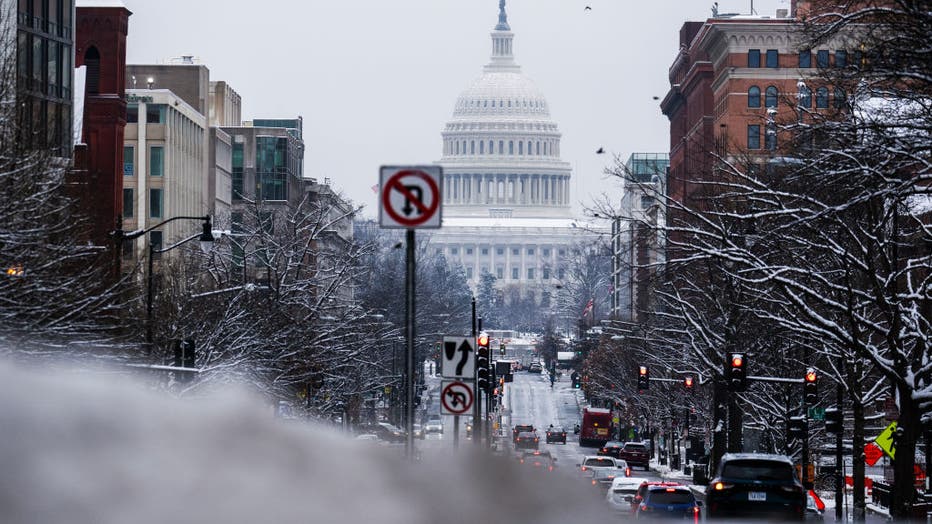
UNITED STATES - JANUARY 16: The U.S. Capitol is pictured from North Capitol Street after 3-4 inches of snow fell across the metro area on Tuesday, January 16, 2024. (Tom Williams/CQ-Roll Call, Inc via Getty Images)
Why should DC care about snow in Siberia?
It might sound strange that snow halfway around the world could influence our weather, but the atmosphere is a connected system.
A rapid expanse of snowfall in Siberia can impact our region in a couple of different ways. Firstly, snowfall is white, of course, and is therefore more reflective. The ground does not absorb as many of the solar rays as it would, if it was grass or rocks. This leads to the formation of some truly cold, arctic air masses over the region. Becoming what you might call a "cold air supply" zone for our region. Think of it like an Amazon warehouse. It’s where all the cold is stored, with some occasionally being delivered elsewhere throughout the course of the winter.
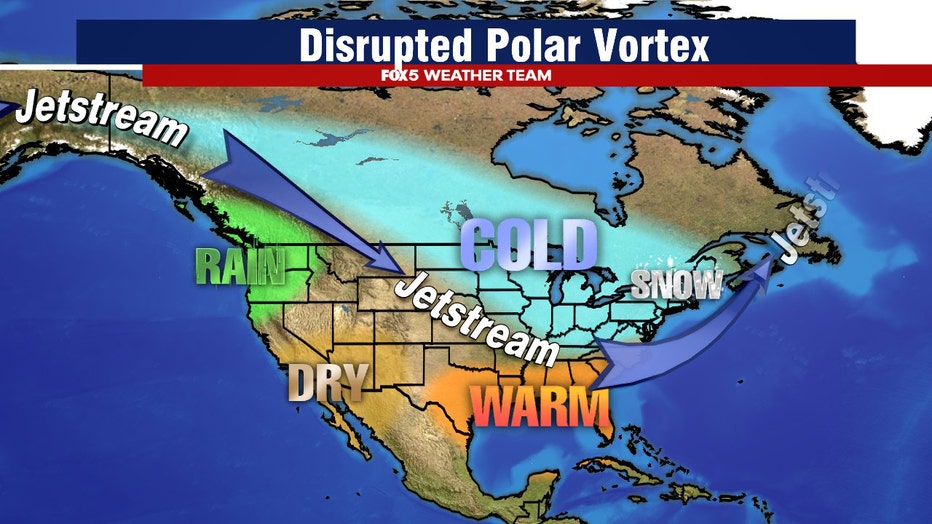
Secondly, the strength of the cold in the region compared with air masses in the surrounding region can impact wind fields in the Northern Hemisphere. Not just east, west, north and south…but also up and down. This can pull warmer air up into the colder stratosphere, which can trigger blocking patterns that are key to the weather in the United States. Such as the Arctic Oscillation and North American Oscillation.
When that happens, pieces of that cold air can spill south into North America, Europe, and Asia. And when one of those "pieces" slides our way…that’s when the East Coast, including Washington, DC, can experience more cold snaps and snowstorms.
Cold, snowy start in Siberia. Could it mean more cold and snow in DC region this winter?
How scientists measure it
Meteorologists use satellite data to watch snow cover across Eurasia throughout October. Each week, they calculate how far south that snow has advanced.
The faster the snow spreads, the higher the SAI number.
Researchers have found that the October SAI often correlates with how strong or weak the polar vortex will be later in winter, and that, in turn, affects whether the eastern U.S. ends up with a mild or stormy season.
Cold, snowy start in Siberia. Could it mean more cold and snow in DC region this winter? (FOX WEATHER)
What could it mean for Washington, DC?
While the SAI is not a crystal ball, it’s a helpful early indicator of what type of winter might be ahead.
• If the SAI is high (fast snow growth in Siberia): DC tends to have a better shot at colder air and more frequent snow chances. The jet stream often dips south, steering Arctic air our way.
• If the SAI is low (slow snow growth): That usually favors milder temperatures, more rain than snow, and fewer opportunities for big winter storms.
For example, during the 2013–2014 winter, when the SAI was notably high, the polar vortex weakened several times, and DC ended up with multiple snow events and one of its colder winters in recent memory.
By contrast, winters with a low SAI, like 2019–2020, tend to feature mild air and a snow shovel that barely leaves the garage.
Bottom line
The Snow Advance Index is one of several global patterns meteorologists watch in the fall, along with El Niño/La Niña and Arctic oscillations, to help gauge what kind of winter might be ahead.
For the DC region, a high SAI this October could mean we’re in for a colder, snowier season, while a low SAI would point toward another mild and slushy winter.
So, as leaves fall here at home, our eyes are also on Siberia, because the way snow builds over there just might help us know whether to dust off the snow boots… or keep the umbrella handy.
The Source: Information in this article comes from the FOX 5 Weather Team and the National Weather Service.