

Hundreds of HHS staff sign letter urging RFK Jr. to stop spreading misinformation

CDC union urges stronger protections after shooting
The union representing employees at the Centers for Disease Control and Prevention (CDC) is calling for enhanced security measures following a shooting incident at the Roybal campus in Atlanta last week. FOX 5 Atlanta's March Teichner joins LiveNOW's Jeané Franseen to share the latest details.
LOS ANGELES - More than 750 current and former federal health employees have signed a letter condemning Health and Human Services Secretary Robert F. Kennedy Jr., accusing him of spreading misinformation that they say fueled mistrust and contributed to this month’s deadly attack at CDC headquarters in Atlanta.
The letter, published on a site called Save HHS, was addressed to both Kennedy and members of Congress. Signatories included staff connected to the Centers for Disease Control and Prevention, the National Institutes of Health, and HHS.
What we know:
On Aug. 8, 30-year-old Patrick Joseph White opened fire at the CDC complex in Atlanta, investigators said, firing more than 500 rounds. Officer David Rose, a former Marine, was killed as he responded to the scene.
Authorities said White blamed the COVID-19 vaccine for making him depressed and suicidal.
In their letter, employees said Kennedy had spread false information about vaccines, disbanded advisory panels, and made inflammatory comments about the CDC — once calling it a "cesspool of corruption."
"Health and Human Services Secretary Robert F. Kennedy, Jr., is complicit in dismantling America’s public health infrastructure and endangering the nation’s health by repeatedly spreading inaccurate health information," the letter stated.
The employees called on Kennedy to meet three demands by Sept. 2:
- Stop spreading inaccurate health information.
- Affirm CDC’s scientific integrity.
- Guarantee the safety of the HHS workforce.
What we don't know:
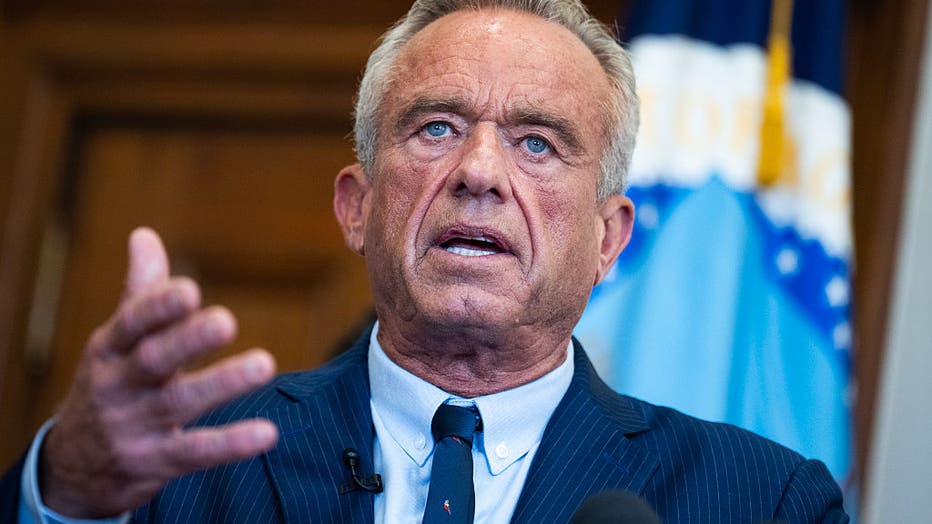
Health and Human Services Secretary Robert F. Kennedy Jr. speaks at a press conference in Washington, D.C., in 2025. More than 750 current and former HHS employees have signed a letter accusing him of spreading misinformation and undermining public h (Tom Williams/CQ-Roll Call, Inc via Getty Images)
It remains unclear how Kennedy will respond to the employees’ demands or whether there will be consequences if he does not act by the Sept. 2 deadline.
The full impact of staffing reductions and policy changes under Kennedy’s leadership also remains uncertain, as many federal health programs are still adjusting to reorganizations.
What they're saying:
A spokesperson for HHS defended Kennedy, saying he had traveled to Atlanta after the shooting "to offer his support and reaffirm his deep respect" for CDC staff, Politico reported.
"Any attempt to conflate widely supported public health reforms with the violence of a suicidal mass shooter is an attempt to politicize a tragedy," the agency said in a statement.
Kennedy, in a recent interview with Scripps News, said regaining public trust depends on transparency: "The way we make the public believe in us is by telling the truth — what we know and what we don’t know."
How this fits into the broader vaccine debate
The employee letter comes as the American Academy of Pediatrics (AAP) is breaking from the CDC on COVID-19 vaccine guidance for the first time in 30 years.
Earlier this week, the AAP said it will continue recommending shots for children ages 6 months to 2 years and for older children with chronic medical conditions, despite the CDC — under Health Secretary Robert F. Kennedy Jr. — scaling back its recommendations and saying healthy children no longer need the vaccine.
Dr. James Campbell, vice chair of the AAP’s infectious diseases committee, said the decision reflects science and pediatric expertise rather than politics. "This is going to be somewhat confusing," he said, "but our opinion is we need to make the right choices for children to protect them."
The backstory:
Before his Senate confirmation as health secretary, Kennedy was best known for promoting debunked theories linking vaccines to autism. Since taking office, he has continued to question vaccine safety and has pushed to overhaul immunization policies.
Criticism of his leadership has come from outside government as well, including the American Public Health Association and medical groups that warn his actions could undermine disease prevention efforts.
The Aug. 20 letter marks a rare instance of federal employees directly challenging a sitting cabinet secretary in such large numbers.
The Source: This report is based on a letter published by Save HHS, statements from the Department of Health and Human Services, and reporting from the Associated Press.