

DC Water holds second public hearing on Potomac Interceptor sewage spill response
DC Water holds second public hearing on Potomac Interceptor sewage spill response
DC Water opened itself up to public scrutiny once again Thursday night, this time in Alexandria, as questions keep growing over the Potomac Interceptor collapse that spewed more than 240 million gallons of sewage into the river. Emergency repairs are now done, but the bigger fight over cleanup, testing, and long-term accountability is far from over.
WASHINGTON - DC Water opened itself up to public scrutiny once again Thursday night, this time in Alexandria, as questions keep growing over the Potomac Interceptor collapse that spewed more than 240 million gallons of sewage into the river.
Emergency repairs are now done, but the bigger fight over cleanup, testing, and long-term accountability is far from over.
The backstory:
It's been one month since the devastating Potomac Interceptor collapse.
On Jan. 19, a portion of the 72-inch diameter sewage line in C & O Canal National Historical Park in Montgomery County broke.
The collapse of the line, which runs along Clara Barton Parkway, sent millions of gallons of sewage water into the canal, which eventually began flowing into the Potomac River.
READ MORE: DC Water crews work to contain major sewage spill
The emergency repairs to the Interceptor were completed on Friday night, March 13. DC Water restored water flow to the Potomac Interceptor on Saturday,
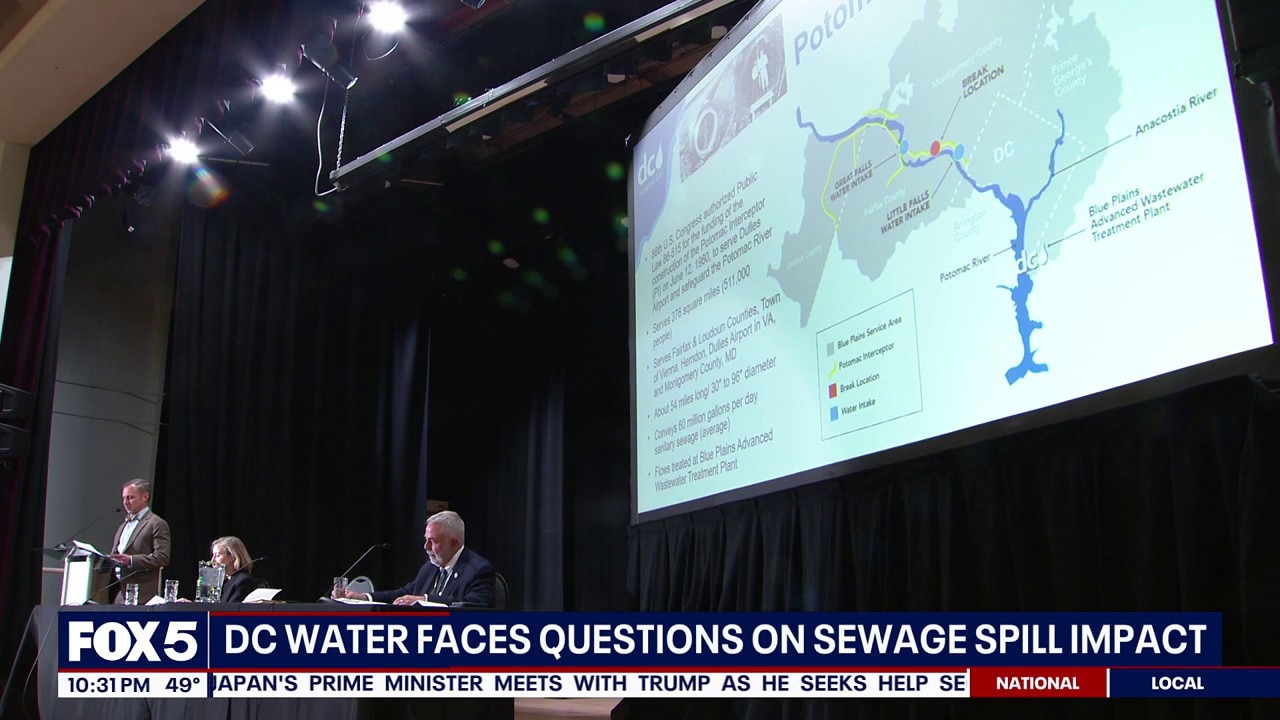
The Potomac Interceptor carries roughly 60 million gallons of wastewater each day from areas near Dulles Airport to the Potomac Pumping Station in D.C., where it is then sent to the Blue Plains Advanced Wastewater Treatment Plant.
Meeting with the public:
DC Water held a town hall in Alexandria to update Virginia residents. There were questions concerning water quality sampling to soil or sediment testing and the impact on fisheries.
Ultimately, people want to be reassured the water is safe.
"Getting the flow back into the interceptor was huge this past weekend. Now the focus is on getting that environmental rehabilitation done, starting the work on C&O Canal — all that work is going to continue, until we get this cleaned up," said Sherri Lewis with DC Water.
With the emergency repairs completed and flow restored to the Interceptor, the temporary bypass system is now being taken down.
Now, the focus shifts to the long-term fix: rehabilitating more than 2,700 feet of pipe by inserting a new pipe inside the old one, a process called slip-lining.
DC Water says that work — and the active construction zone around it — could last another nine to ten months.
Dig deeper:
At the same time, crews are removing sludge, contaminated soil, and debris from the C&O Canal, drainage channels, and shoreline near the collapse site.
Many who love to participate in recreational activities along the Potomac asked about fishing.
"From a fishery standpoint, they don't believe there's a significant imapct from the bottom-dwelling fish," said Mike Rolband, Director of the Virginia Department of Environmental Quality. "They don't expect negative health impacts, and BDH, although its a Maryland river, so its for Maryland to issue any fish advisories."
While some health advisories have been lifted, not all concerns are gone.
Maryland health officials this week partially lifted the recreational water advisory, allowing activity downriver beginning at Lock 8, but the advisory remains in effect closest to the spill site, including parts of the shoreline and water near Swainson Island.
Officials warn some odors may linger as cleanup continues.
DC Water has said it still does not know the exact cause, though officials have pointed to possible pressure from large rock backfill and thinning pipe walls.