

Why everything has protein now as GLP-1 drugs reshape what America wants to eat
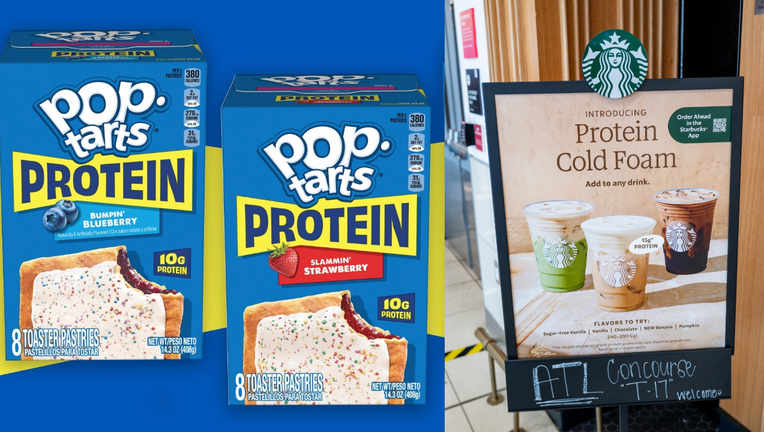
(Courtesy: Pop Tarts & Getty Images)
WASHINGTON, D.C. - If it feels like every brand suddenly wants to sell you protein, you are not imagining it.
Protein has become one of the easiest ways to market food in 2026, showing up in everything from restaurant bowls and burger wraps to cereals, shakes and coffee drinks. But this is not just another wellness fad. Researchers, dietitians and food companies are all pointing to the same force behind at least part of the shift: the rise of GLP-1 drugs and the new eating habits they are creating.
Why 'protein marketing' is suddenly everywhere
The protein push did not start with Ozempic or Wegovy, but the GLP-1 era has given it fresh momentum.
Johns Hopkins Bloomberg School of Public Health says Americans were already surrounded by a culture that treats protein as shorthand for health, with products like protein lattes and protein cereal helping fuel the idea that more is always better. At the same time, researchers note that most Americans already consume plenty of protein, averaging about 1 gram per kilogram of body weight.
What has changed is how aggressively that message is being packaged and sold.
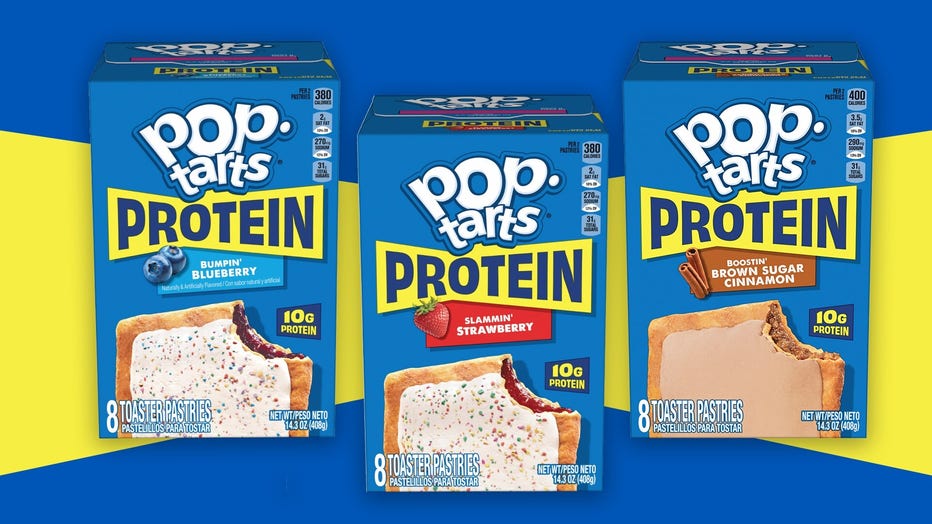
Pop-Tarts Protein offers 10g of protein per serving in three flavor varieties: Bumpin’ Blueberry, Slammin’ Strawberry and Boostin’ Brown Sugar Cinnamon (Courtesy: Pop Tarts)
A 2025 Food Policy paper found GLP-1 use increases willingness to pay for many protein products and can reduce price sensitivity for some of them, suggesting these medications are not just changing individual appetites, but also shifting demand in ways the food system can feel.
The GLP-1 effect on menus and marketing
Vogue reported that restaurants are already redesigning menus around the needs and habits of people taking GLP-1 medications. Dietitian Amy Shapiro told the magazine the industry is seeing more higher-protein callouts, smaller portions and macro-conscious offerings, even if not every restaurant creates a menu explicitly labeled for GLP-1 users.
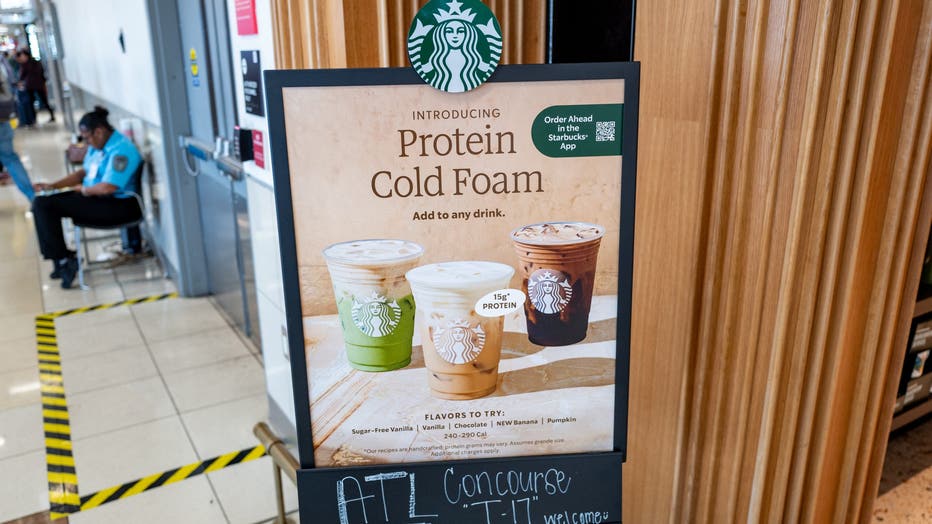
Sign for Starbucks Protein Cold Foam drinks at Hartsfield-Jackson Atlanta International Airport, Atlanta, Georgia, United States, October 19, 2025. (Photo by Smith Collection/Gado/Getty Images)
That shift is already visible at major chains.
According to Vogue, Shake Shack introduced its "Good Fit" menu this year with an emphasis on protein, portion balance and customization. Chipotle launched a High Protein Menu in late 2025, with options ranging from 15 to 81 grams of protein. Chipotle’s interim chief marketing officer told Vogue the company saw a chance to make high-protein choices "more visible and convenient," and later said extra protein orders were up 25%.
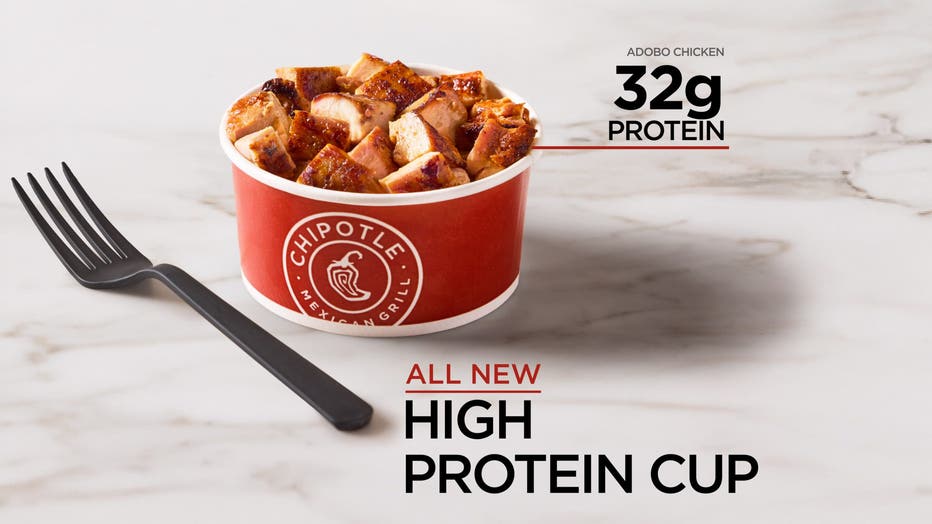
Chipotle's High Protein Cup, a 4-ounce side of Adobo Chicken (Photo: Chipotle)
In other words, brands are not just responding to health advice. They are responding to a customer base that is eating differently, asking different questions and increasingly looking for foods marketed as compatible with weight-loss drugs.
Why GLP-1 users are changing the conversation
People on GLP-1 medications often eat less overall and may prioritize foods that help them feel fuller, preserve muscle mass or sit more comfortably in smaller meals. That is one reason protein has become such a powerful selling point in the GLP-1 era. Vogue reported that experts and menu developers are focusing on combinations like higher protein, more fiber and smaller portions, while trying to avoid foods that are overly heavy, greasy or rich.
But the marketing opportunity goes beyond people actually taking those drugs.
Vogue also reported that some so-called GLP-1-friendly dishes are drawing in customers who are not on the medications at all, turning what began as niche positioning into a broader mainstream menu strategy.
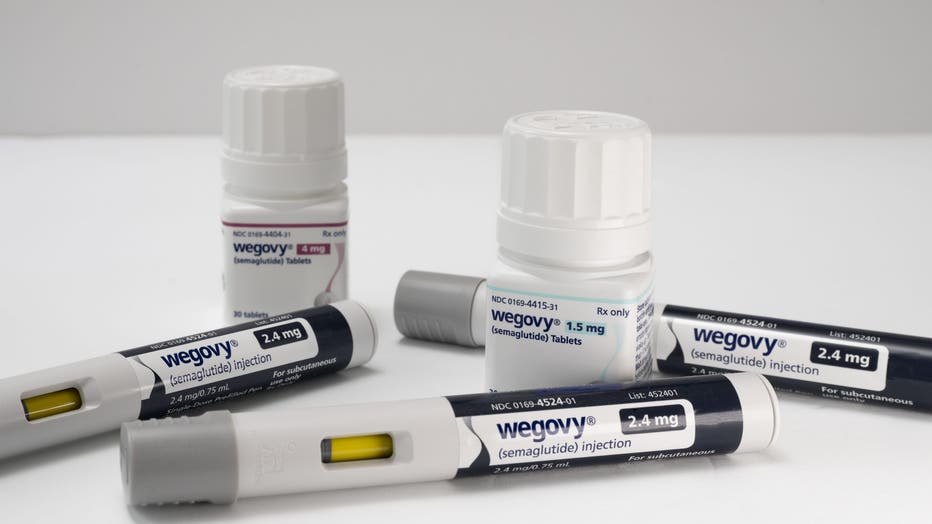
Photo Illustration of the new Wegovy 1.5 mg and 4 mg semaglutide tablets with injectable prescription weight loss pens on a white background. Its a prescription medicine used with a reduced calorie diet and physical activity. (Photo by: Michael Siluk
More protein does not automatically mean healthier
That is where the trend gets more complicated.
Johns Hopkins experts warn that the real nutrition story is not simply that Americans need dramatically more protein.
Take protein Pop-Tarts. The label highlights 10 grams of protein, but a closer look shows about 30 grams of added sugar in the same serving, a reminder that "high protein" does not always mean healthy.
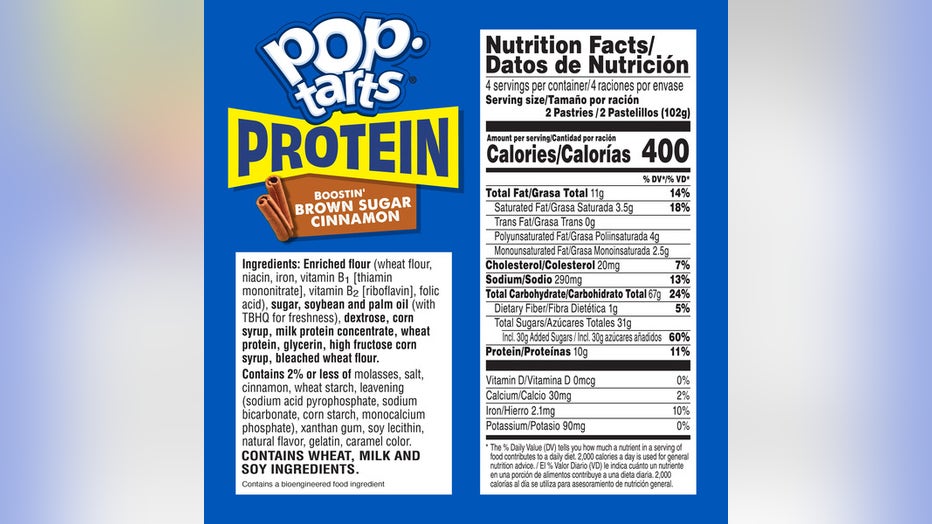
(Courtesy: Pop Tarts)
Rather, they argue, the conversation has crowded out a more important point: many Americans are still falling short on fiber-rich foods like beans, peas, lentils, fruits, vegetables, whole grains, nuts and seeds. The school reports that roughly 90% to 95% of Americans do not get enough dietary fiber.
Johns Hopkins also stresses that "protein" is not one uniform good. A steak and a bowl of lentils may both deliver protein, but they come with very different nutrient profiles. Plant proteins, for example, also bring fiber and other nutrients, while red and processed meats can come with higher levels of saturated fat and other health concerns.
That matters because a product can be marketed as protein-forward and still fall short nutritionally. Vogue made a similar point, noting that a "GLP-1 friendly" label does not guarantee an ideal choice if the food is still high in fat or sodium or lacks fiber and micronutrients.
So why does it feel like every brand is doing this now?
Because several trends are colliding at once.
America already had a long-running protein obsession. Food brands were already looking for health language that sells. Then GLP-1 drugs arrived and created a new, fast-growing group of consumers who often want smaller portions, more protein and foods that feel efficient rather than indulgent. That gave restaurants and packaged-food companies a clear story to market, and in many cases, a reason to charge more for it.
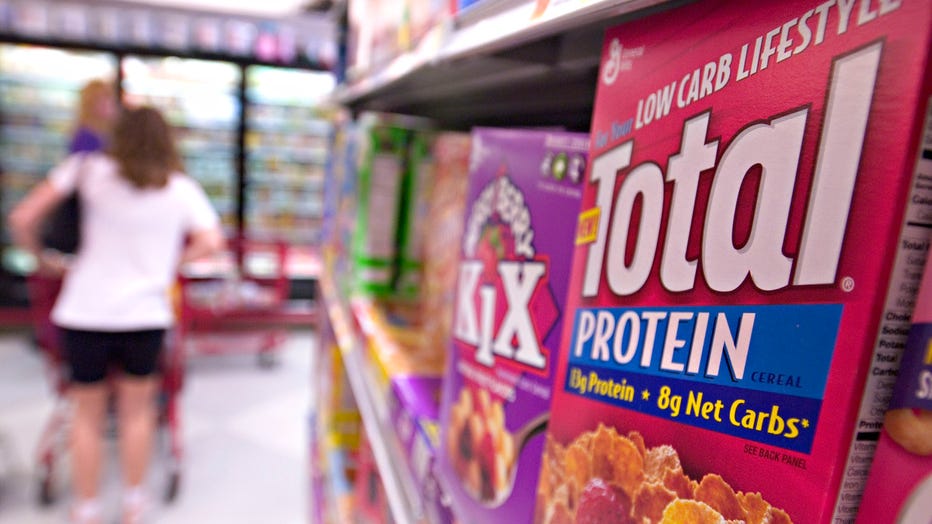
UNITED STATES - JUNE 30: General Mills Total Protein cereal sits on display in a supermarket in New York on June 30, 2004. Diageo Plc, the world's biggest liquor company, raised $2.26 billion by selling more than half its stake in General Mills Inc.,
The result is the food landscape consumers are seeing now: protein everything, portion-conscious menus, and a steady stream of products designed to feel compatible with the so-called Ozempic diet, whether they are officially tied to those drugs or not. That does not mean the trend is fake. It does mean it is partly nutritional, partly behavioral and very much commercial.
What's next:
The protein wave is unlikely to disappear anytime soon.
The Food Policy study suggests GLP-1 use is reshaping demand in measurable ways, and restaurant brands told Vogue they are already planning more protein-led products and menu expansions. But if the trend keeps growing, public health experts say the bigger challenge will be making sure consumers do not confuse protein marketing with overall diet quality.
The Source: This article was written using information from Johns Hopkins Bloomberg School of Public Health, Vogue and a 2025 Food Policy study published through ScienceDirect.