

Bill to end government shutdown heads to House after Senate comes to agreement
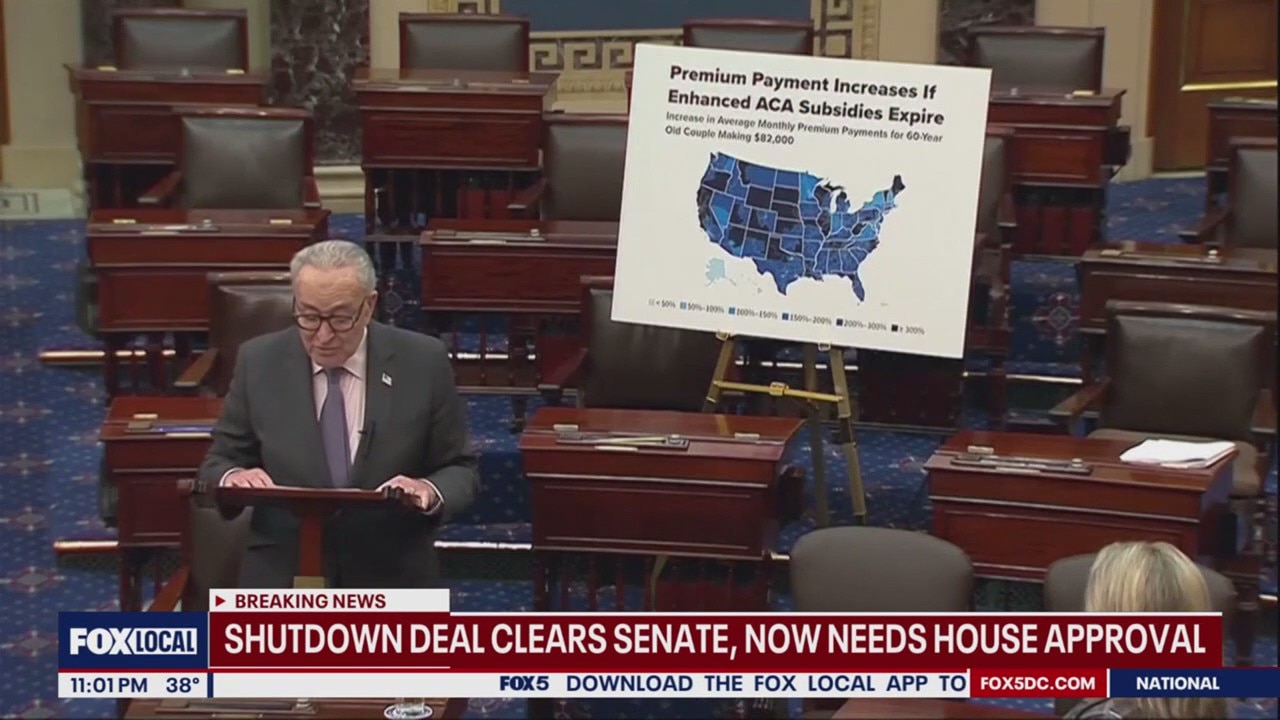
Senate shutdown deal clears Senate, heads to House for approval
The Senate reached a deal on a stopgap spending bill on Monday after a group of Democratic senators got on board with the Republican legislation. But the record-long government shutdown is not quite over. It now heads to the House for a vote.
WASHINGTON - Fourty-one days into the government shutdown, the Senate has finally reached an agreement on a stopgap bill.
The deal couldn’t have been done without eight Senate Democrats crossing the aisle to help re-open the government.
But there’s still another hurdle to cross – it still needs to pass the House before it can reach the president’s desk, but once that happens the government will re-open and the shutdown will end.
What we know:
After weeks of negotiations, a group of moderate Democrats sided with the GOP on a bill to reopen the government without a guaranteed extension of health care subsidies.
The move angered many in their caucus who have demanded that Republicans negotiate with them on the Affordable Care Act tax credits that expire Jan. 1.
"We applaud the senate democrats and one independent who did the RIGHT thing they decided on principal over their personal politics," House Speaker Mike Johnson said.
Virginia Sen. Tim Kaine is one of the Democrats who voted yes but only if Republicans agreed to the following full backpay for federal employees restore SNAP benefits for a year and no more of the mass firings we’ve been seeing.
"Controversial, tough call. Some of my colleagues don’t like it, but my Governor-Elect is very happy with it. My interactions with Virginians demonstrate that they are quite happy with it," Kaine said.
FOX 5 did reach out to Virginia’s Governor-elect Abigail Spanberger for comment. In a statement she said, "Governor-elect Spanberger appreciates Sen. Kaine fighting for protections for Virginia’s workforce and securing them as part of the negotiations."
The other side:
But not all Virginia Democrats agree with this move by Kaine.
His colleague, Sen. Mark Warner, voted no to the GOP bill saying he cant support this budget that does not address healthcare for millions of Americans.
As of now, the conversation about health care subsidies is on hold.
Kaine says Republicans promise to discuss and debate it next month, but Virginia Rep. James Walkinshaw isn’t buying it.
"My Republican colleagues here in the house any time they start talking about healthcare and reforming healthcare, they end up coming up with ways to take more healthcare away from hard working American families," Rep. James Walkinshaw, D-Va., said. "They are refusing to extend the ACA tax credit. I don’t trust that they will do it but I’m going to keep urging them to do so."
What's next:
Now that the Senate has passed the measure, it heads to the House.
Speaker Mike Johnson has called for house to come back in session where they will vote on this bill, which we are told could happen quickly.
From there, it’s off to the White House for the presidents signature to officially reopen the government.
Local perspective:
The end of the shutdown is being met with relief. From airports to food banks the impact is being especially felt across the DMV but some folks at the Capitol told FOX 5 that the deal to reopen the government doesn’t seem much different than was on the table in September.
"When you’re negotiating I don’t think things are like vital for people’s lives should be what you use," one person told FOX 5.
"We’re citizens of this country and they just need to do what is necessary to move the country forward," said another.
Once the continuing resolution finally gets through the Senate and the House, it will head directly to the White House where Trump is expected to sign the bill, and the longest shutdown in history will finally come to an end.