

Technical failure, communication breakdown led to Maryland home explosion: NTSB
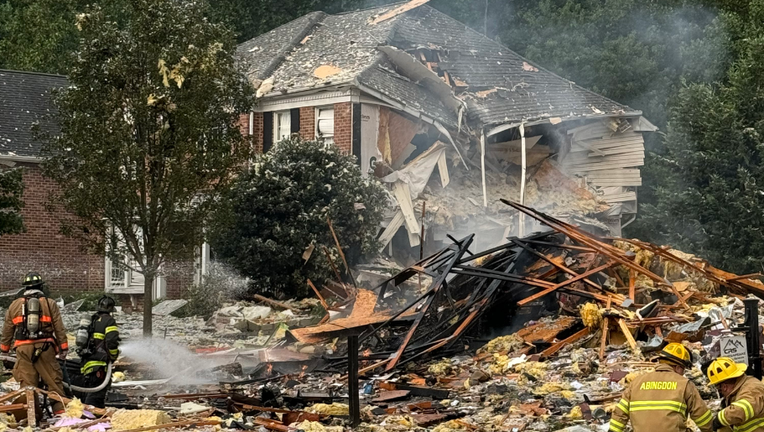
Two people were killed after a house explosion in Bel Air Maryland August 2024
BEL AIR, Md. - Underground technical failures, communication breakdowns and an impaired utility worker led to a deadly home explosion in Bel Air, Maryland, according to a newly released report from the National Transportation Safety Board (NTSB).
The explosion in August 2024 left a 73-year-old homeowner and a Baltimore Gas and Electric (BGE) contractor dead, and injured a neighbor and a utility worker who was onsite to address an electrical issue.
READ MORE | 73-year-old homeowner, BGE contractor killed after house explodes in Maryland neighborhood
What we know:
According to the NTSB report, the issue began due to an underground technical failure.
The report details how electrical service lines were buried together with plastic gas service lines in a trench that did not allow for enough separation. The lines were as close as three inches apart in some areas, while the recommended standard is 12 inches, according to the report.
An underground electrical fault caused extreme heat, and the copper tracer wire that ran alongside the gas line heated up a plastic gas pipe, creating a hole that allowed gas to escape into the soil near the home, according to the report.
A series of communication breakdowns left the issue unaddressed for hours, the report said.
Nearly 10 hours before the explosion, an electrical technician reported the gas leak to an electrical dispatcher. However, according to the report, the dispatcher recorded the wrong location, sending a gas technician to a home less than a mile away. The technician inspected the location, found no signs of gas, and left.
Less than an hour before the explosion, a Harford County water worker tried to call BGE’s emergency line multiple times after smelling gas and hearing hissing sounds. According to the report, the line went blank.
The NTSB investigation found that BGE’s automated phone system had routed the emergency calls to an on-call agent who had been drinking before an unscheduled overtime shift and had fallen asleep at his desk.
"Exelon did not submit the accident call-center agent for post-accident drug and alcohol testing. Therefore, the NTSB could not quantify the extent of the call-center agent’s drug or alcohol impairment or determine whether it was a factor in the accident," the report reads.
Corrective actions
Dig deeper:
According to the report, BGE and its parent company, Exelon, have made several changes in response to the findings.
The company's phone system has since been updated to force overnight and weekend agents to manually answer incoming calls rather than letting the system automatically answer.
"This accident showed that natural gas distribution pipeline operators must be able to receive all reports of suspected gas leaks," the report said. "Operators must ensure that their public-facing phone systems are set up to appropriately receive customer calls and that any call handlers on duty are adequately trained and fit to answer emergency calls."
Supervisors are now required to administer screenings to ensure call-takers are physically and mentally fit for emergency shifts.
Electric technicians who respond to underground faults are required to note if the electric lines share a trench with gas utilities. If so, they are mandated to stay on site until a gas technician arrives to confirm safety.
BGE has also launched a program to install a device in some trenches that would act as a barrier between gas and electric lines, according to the NTSB report.
"The Bel Air accident demonstrates the importance of an effective and coordinated response to reports of suspected natural gas leaks, particularly for companies whose operations include natural gas and electric utilities," the report reads.
The Source: This information is from the National Transportation Safety Board (NTSB) and past FOX 5 DC reporting.