

Potomac River sewage spill: VDH urges residents to avoid contaminated water
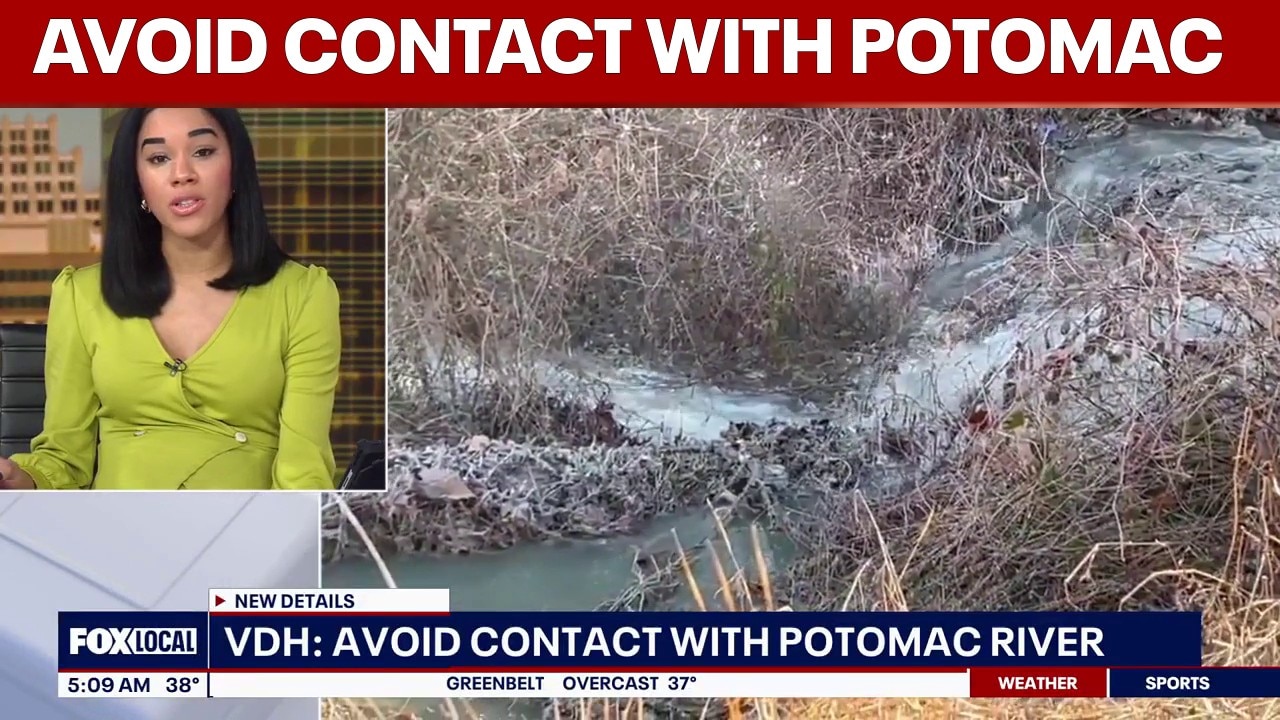
VDH: Avoid contact with Potomac River
The Virginia Department of Health is urging people to avoid the Potomac River following last month’s massive sewage spill.
WASHINGTON - The Virginia Department of Health (VDH) has issued a recreational water advisory after a major sewage spill contaminated the Potomac River.
The spill began January 19, when a 72‑inch section of the Potomac Interceptor collapsed in Montgomery County, Maryland, sending sewage shooting out of the ground and into the river.
READ MORE: Sewage continues to spill into Potomac River after major line collapses
What we know:
DC Water says the break has released an estimated 200 million gallons of wastewater. Repairs were delayed earlier this month after crews discovered an unexpected blockage in the line.
Officials say the drinking water supply has not been affected.
"For the safety of people and pets, VDH is advising Virginia residents to avoid recreational water activities in the Potomac River, such as swimming, wading, tubing, white-water canoeing or kayaking, where full-body submersion is more likely to occur," the VDH said in an online statement.
The advisory covers a 72.5‑mile stretch of the river, from the American Legion Memorial Bridge (I‑495) in Fairfax County to the Governor Harry W. Nice Memorial Bridge (Route 301) in King George County.
READ MORE: Maryland leaders push oversight after historic Potomac spill
Trump responds
What they're saying:
President Donald Trump responded to the situation on Truth Social Monday.
In his statement, the president blamed the "ecological disaster" on the "gross mismanagement of local democrat leaders, particuarly, Governor Wes Moore, of Maryland."
"It is clear local authorities cannot adequately handle this calamity," the president wrote. "Therefore, I am directing federal authorities to immediately provide all necessary management, direction and coordination to protect the Potomac, the water supply in the Capital Region and our treasured national resources in our Nation’s capital city."
"The federal government has no choice, but to step in," he added. "FEMA, which is currently being defunded by the Democrats, will play a key role in coordinating the response. Thank you for your attention to this matter!"
It's important to note that the so-called Potomac Interceptor is maintained by DC Water, and runs along the Clara Barton Parkway — which is maintained by the federal government by way of the National Park Service.
The state of Maryland does not own the sewer line.
Gov. Moore's office responded to the president's post later on Monday.
"The President has his facts wrong—again. Since the last century, the federal government has been responsible for the Potomac Interceptor, which is the origin of the sewage leak," Ammar Moussa, spokesperson for Governor Moore, said in a statement provided to FOX 5 DC. "For the last four weeks, the Trump administration has failed to act, shirking its responsibility and putting people's health at risk."
"Apparently, the Trump administration hasn’t gotten the memo that they’re actually supposed to be in charge here," Moussa added. "The Potomac isn’t a talking point, and the people of the region deserve serious leadership that meets the moment."
What you can do:
The VDH issued these tips to prevent recreational water illnesses:
- Avoid contact with water in the advisory area and observe advisory signage posted at waterbody access points.
- Avoid any area of the water body where water has a foul odor, dead or dying fish or discolored water.
- Promptly wash skin with soap and water if you cannot avoid contact with water in the vicinity.
- Rinse or wash items that come into contact with the water, including clothing, fishing gear, life vests, ropes and paddles.
- Seek medical care and notify your practitioner of the waterbody exposure if you experience adverse health effects after contact with the waterbody.
- When harvesting fish or crabs, discard skin, organs, cook the meat to proper temperature and clean cutting boards and cutting implements with warm soapy water.
What's next:
DC Water crews and contractors are nearly done building an enhanced bypass system, which will allow emergency repairs to begin on a damaged section of the Potomac Interceptor, according to a press release. The emergency repair phase is expected to take another four to six weeks once the bypass is activated.
Once emergency repairs are finished, a longer-term rehabilitation phase will begin, which DC Water says will take about nine to ten months.
The Source: Information in this article comes from DC Water, the Virginia Department of Health, The Associated Press and previous FOX 5 DC reporting. Statements from President Donald Trump and Gov. Wes Moore's office were also referenced.