

License plate cameras may soon track parking time in DC loading zones
DC considers new camera-based parking system
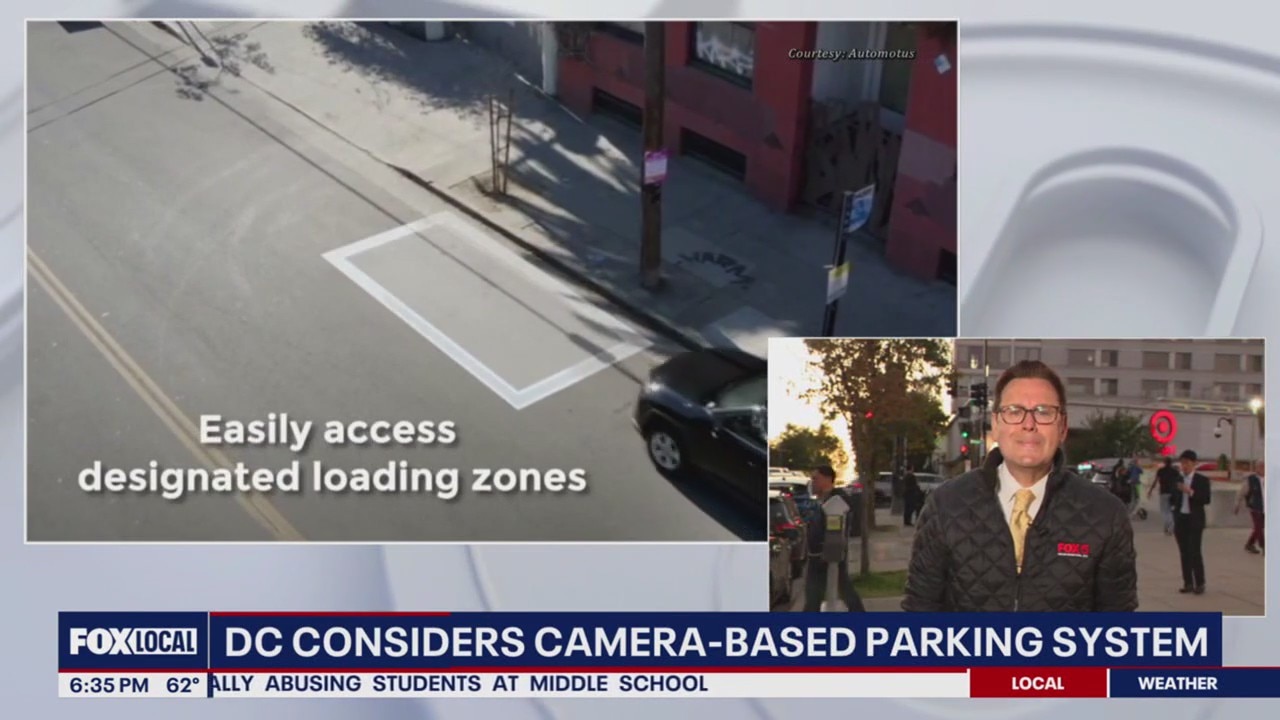
The days of guessing how long to feed the meter in D.C. loading zones may soon be over. The D.C. Council held a public hearing this week to explore new technology aimed at reducing double parking and improving traffic flow by using license plate-reading cameras to monitor and charge vehicles parked in designated loading areas. FOX 5's Tom Fitzgeral reports.
WASHINGTON - The days of guessing how long to feed the meter in D.C. loading zones may soon be over. The D.C. Council held a public hearing this week to explore new technology aimed at reducing double parking and improving traffic flow — by using license plate-reading cameras to monitor and charge vehicles parked in designated loading areas.
What we know:
It’s called a "Smart Parking Zone." The system, currently being tested in the Navy Yard neighborhood, is developed by the transportation tech company Automotus. It relies on cameras installed at loading zones that automatically scan vehicle license plates as drivers pull in. Under the pilot model, parking for 15 minutes or less would be free. Vehicles parked longer would be charged automatically, based on their duration of stay.
What they're saying:
City officials say the initiative could be a game-changer for congested areas where delivery drivers, rideshare vehicles, and others often double-park, clogging traffic lanes.
"Right now the double parking and trucks stopping in the middle of the road is just out of control," said Ward 6 Councilmember Charles Allen. "This is a great way to manage it."
Automotus co-founder Jordan Justus says the goal is to encourage turnover in high-demand loading zones by making longer stops more expensive — and rewarding quick in-and-out stops with free time. "We’ve seen up to a 70% increase in parking turnover in cities using this technology," Justus said during the hearing.
Sharon Kershbaum, Director of the D.C. Department of Transportation (DDOT), also endorsed the idea. "The cameras use license plate readers to know exactly when you arrive and when you leave, so you're only charged for the time you’re actually parked," she explained.
But not everyone is sold. Some residents voiced concerns about privacy and government surveillance, especially in a city already equipped with red-light, speed, and security cameras.
"I always say that less cameras is better," one resident told Fox 5. "I don’t want cameras following me around everywhere, to be honest."
Another added: "We already have so many cameras and so much surveillance going on. It feels like overkill — or just another money grab."
What's next:
Despite the pushback, city officials say the program is still in its early stages. If the Council approves the pilot plan, it could roll out as early as 2026 — with a limited pilot potentially starting next year.
For now, the debate continues over how to balance convenience, traffic enforcement, and privacy in a city that's no stranger to camera-based monitoring.