

How obtaining a COVID vaccine in DC, Maryland and Virginia has changed

RFK's shift on COVID vaccine causing confusion
On The Final 5, Dr. Adam Brown of ABIG Health voiced concern over HHS Secretary Robert F. Kennedy Jr.’s decision to cut vaccine research funding and scale back access to mRNA COVID vaccines. His warning comes after nine former CDC directors issued an open letter accusing Kennedy of endangering public health, following the abrupt dismissal of CDC Director Dr. Susan Monarez. Brown stressed that conflicting guidance from federal agencies is fueling confusion, while Kennedy’s actions risk eroding trust in vaccines and scientific institutions—jeopardizing decades of progress in disease prevention. He urged Americans to seek evidence-based guidance from trusted medical organizations.
WASHINGTON, D.C. - There has been a major shift in the nation's COVID-19 vaccine policy. Recently, the FDA has ended the broad emergency use authorizations for vaccines, a change that will end the blanket access that allowed most people to get a shot without a doctor's note. The change impacts vaccine availability across the country, including in Virginia, Maryland and Washington, D.C.
What we know:
In a series of recent FDA actions, the emergency use authorizations for COVID-19 vaccines, once used to justify mandates during the Biden administration, have been rescinded. This ends the era of broad public access to the shots, according to a post from Secretary of U.S. Department of Health and Human Services Robert F. Kennedy.
Under the new framework, vaccine eligibility has been narrowed to specific groups:
- Adults 65 and older remain eligible for vaccination.
- Children and adults aged 5–64 are now only eligible if they have an underlying health condition, such as asthma, heart disease or cancer.
- Shots for healthy children under 5 are no longer broadly approved.
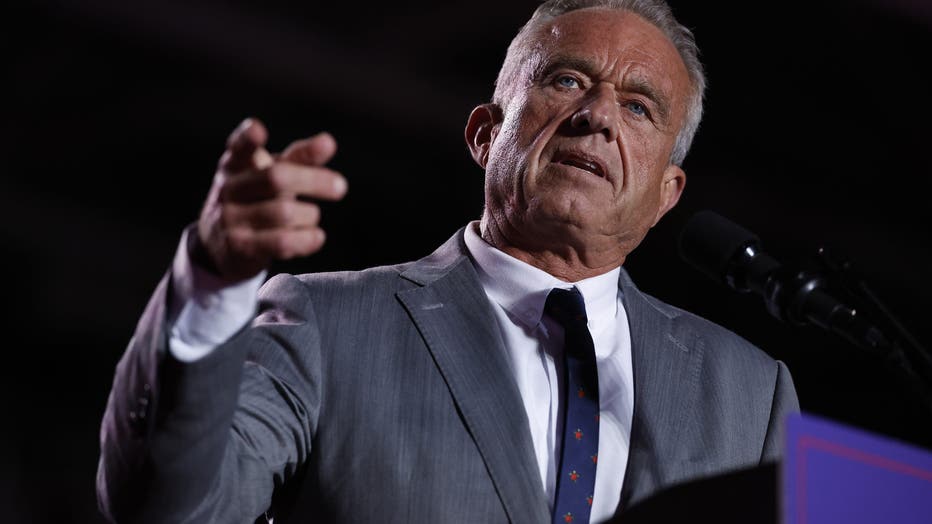
(Photo by Chip Somodevilla/Getty Images)
Dig deeper:
The FDA has now issued marketing authorization for vaccines for higher-risk individuals, including Moderna for those 6 months and older, Pfizer for those five years and older, and Novavax for those 12 and older. These vaccines are now available for patients who choose them after consulting with their doctors.
The Department of Health described the new framework as one that delivers "science, safety and common sense."
Pfizer says COMIRNATY receives FDA approval
The FDA has issued marketing authorization for the new COMIRNATY® LP.8.1 vaccine from Pfizer and BioNTech.
The vaccine is approved for adults 65 years and older and for individuals ages 5 through 64 who have an underlying condition that puts them at high risk for severe COVID-19 outcomes. Pfizer has begun shipping the new formulation to ensure a robust supply is available in pharmacies, hospitals and clinics across the country.
The press release also includes important safety information, noting that potential side effects can include severe allergic reactions, myocarditis and pericarditis.
Medical professionals raise concerns
Medical professionals are voicing their concerns over RFK Jr.'s decision to cut vaccine research funding and scale back access to mRNA COVID vaccines.
There is confusion among both patients and clinicians regarding who is eligible or not for the COVID vaccine, according to Dr. Adam Brown of ABIG Health.
"I have a lot of concern, because what we see RFK doing is creating distrust in the institutions that have kept us safe and kept the American public having longer life expectancy due to strong public health policies," Brown said. "It doesn't stop with COVID, that distrust starts to go with any of our new scientific evidence or medications. That is a dangerous place to be for the United States."
Dr. Brown also weighed in on how it is "a little bit odd he would go back on that" when referring to President Donald Trump's initial push for people to get vaccinated during his first term in office.
"It is a little bit odd… putting that trust into RFK Jr., who has been in his career very much anti-vax," Brown said. "As many people that can get vaccinated should get vaccinated to reduce the burden on the community and protect those who are most vulnerable."
What vaccines can I get?
Patients are encouraged to get a recommendation from their doctor regarding the new COVID vaccines, as more information becomes available.
You are still able to make appointments at pharmacies like CVS in DC, Maryland and Virginia for the flu vaccine, Hepatitis A, Hepatitis B, HPV, MMR and more.
The Source: This article is based on information from the U.S. Department of Health, Secretary Kennedy, and the FDA.