

How does the new 2026 World Cup format work? What to know about the expanded tournament
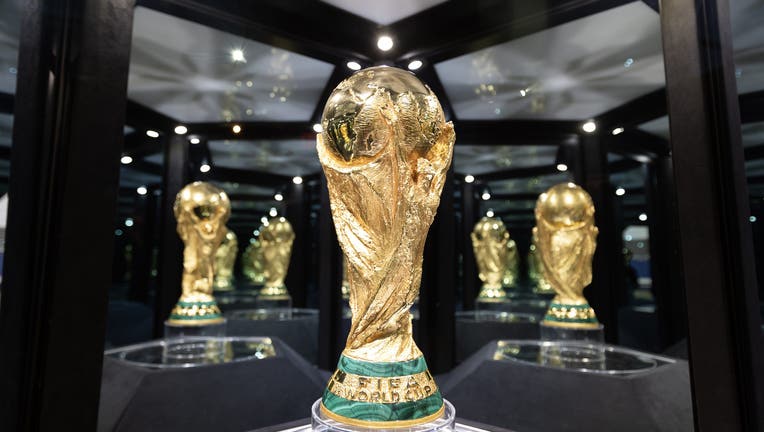
DALLAS, TEXAS - APRIL 26: The original trophy is seen at the FIFA World Cup 26 Trophy Tour on April 26, 2026 in Dallas, Texas. (Photo by Omar Vega - FIFA/FIFA via Getty Images)
NEW YORK - The FIFA World Cup is set for its biggest change in a generation. For the 2026 tournament, the number of teams will jump from 32 to 48, altering the competition's format and creating a new set of opportunities and challenges for the world of soccer.
This breakdown explains the new format, the arguments for and against the change and its impact on different regions.
How has the World Cup format changed over the years?
The 2026 World Cup will introduce a new format for just the fourth time in World Cup history.
- From the tournament's inception in Uruguay in 1930 to the 1950 World Cup in Brazil, there were between 13-16 participant nations.
- From Switzerland 1954 through Argentina 1978, there were 16 nations, and between 26 and 38 matches played.
- In Spain's 1982 World Cup, 24 teams were able to qualify for the tournament. This lasted until the last time the USA hosted the World Cup in 1994.
- From 1998's World Cup in France to Qatar 2022, 32 teams battled against each other in the tournament with a massive 64 matches played in total each time.
The new allocation of automatic qualifying spots for each confederation is as follows:
- Asia (AFC): 8 spots (an increase of 4)
- Africa (CAF): 9 spots (an increase of 4)
- North, Central America and Caribbean (CONCACAF): 6 spots (an increase of 3)
- Europe (UEFA): 16 spots (an increase of 3)
- South America (CONMEBOL): 6 spots (an increase of 2)
- Oceania (OFC): 1 spot (an increase of 1)
RELATED CONTENT: What is the ‘draw’ for the 2026 FIFA World Cup?
How many games will be played in the 2026 FIFA World Cup?
The 2026 tournament will feature 48 nations and 104 matches across the U.S., Mexico and Canada, up from 64 matches in the previous 32-team format. That is a major increase in games as FIFA expands the competition for the first time since 1998. FIFA’s current schedule confirms the 104-match format.
The group stage, or opening rounds, of the tournament will feature 12 groups of four teams. According to FIFA, adopting 12 groups of four was chosen over the option of 16 groups of three teams because team and fan experience, player welfare and sporting integrity were taken into consideration.
"The tournament will be six or seven days longer, but the actual footprint between release and final will be the same footprint as 2014 and 2018," said Victor Montagliani, the chairman of the 2026 World Cup and president of CONCACAF.
The 2026 World Cup itself is set to last 39 days — which is a week longer than the 2010, 2014 and 2018 World Cups and 10 days more than Qatar 2022.
The most significant addition is the Round of 32, a new knockout round. The top two teams from each of the 12 groups will automatically advance, making up 24 teams. The remaining eight spots will be filled by the "best" third-placed teams from the groups.
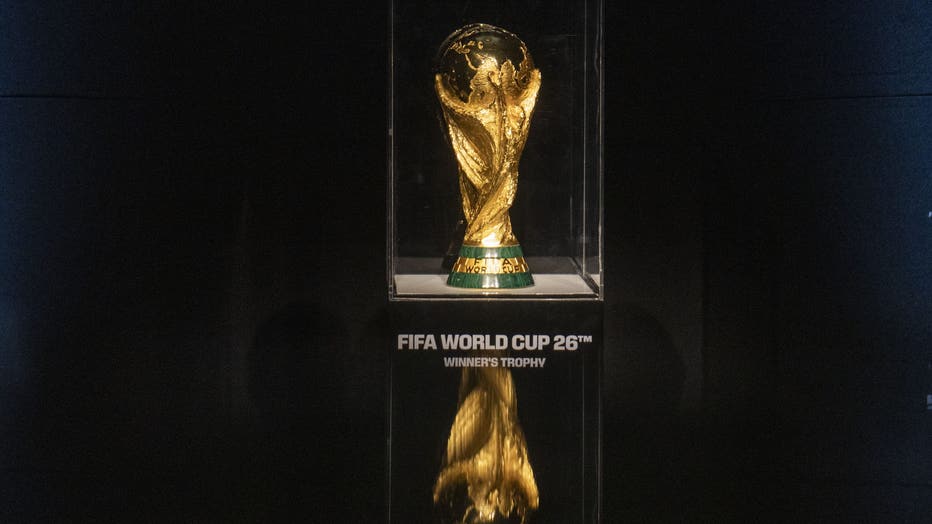
MEXICO CITY, MEXICO - JUNE 11: Detailed view of the 2026 World Cup trophy during the unveiling of the countdown clock 1 year ahead of the 2026 FIFA World Cup at General Prim on June 11, 2025 in Mexico City, Mexico. (Photo by Cristopher Rogel Blanquet
The tournament breakdown (June 11 through July 19)
- Group stage: June 11 through June 27
- Round of 32: June 28 through July 3
- Round of 16: July 4 through July 7
- Quarterfinals: July 9 through July 11
- Semifinals: July 14 and July 15
- Third-place match: July 18
- Final: July 19 at New York New Jersey Stadium
The "pros": More chances to dream
Supporters say the new format's primary benefit is the increase in inclusion and global growth. The expansion from 32 to 48 teams provides more opportunities for nations from Africa, Asia and CONCACAF to compete on the world stage, which can inspire a new generation of players and fans.
The new format also increases the chances for a "Cinderella" or "dark horse" nation — a surprise team — to make a deep run into the knockout stages. This has been a popular feature of other tournaments and adds to the drama of the competition. While the group stage may have less risk for top teams, the addition of a Round of 32 adds another layer of high-stakes, single-elimination drama.
The "Cons": The injury risk of more games
Not everyone is a fan of the new format. Critics argue that an expanded field will dilute the quality of play, leading to more one-sided matches in the group stage.
The system of advancing "best third-placed teams" has also been a point of contention in other tournaments, as it can create complicated tie-breaking scenarios and lead to uncertainty. A key concern is player welfare, as the extra knockout round means some teams will play eight matches instead of the traditional seven, adding to the physical toll on players after a grueling club season.
Player welfare is already a major concern among fans, players and coaching staff, as the increasing number of games each season can directly lead to a higher risk of injuries. Top-level players in Europe already play in multiple in-season club tournaments, including the long regular league season. Many were critics of the new FIFA Club World Cup format over the summer due to burnout and injury concerns, including iconic ex-Liverpool coach Jürgen Klopp who said the CWC was "the worst idea ever implemented in football."
RELATED CONTENT: Will FIFA World Cup 2026 be transformative for soccer in the USA?
What's next:
The expanded World Cup is no longer a far-off idea. As of May 13, the tournament is less than a month away, with the opening match scheduled for June 11.
That means fans are now entering the final stretch before the biggest World Cup in history begins. Host cities are preparing transportation plans, fan festivals, public viewing areas and security operations, while teams are finalizing preparations for a tournament that will look different from any World Cup before it.
For fans, the new format means more games, more teams and more chances for surprise runs. It also means a longer road to the trophy, with the eventual champion needing to survive a 48-team field and a new Round of 32 before reaching the final on July 19.
The Source: This article was written with information sourced from FIFA and ESPN World Cup coverage.