

House votes to end the government shutdown: Here’s what happens next

President Trump signs bill to reopen government
President Donald Trump has signed the bill to reopen the government following the longest shutdown in American history.
WASHINGTON, D.C. - The House has voted on a funding package that would end the record-long government shutdown. But once lawmakers approve the deal and the President signs it, things won’t instantly go back to normal. It could take several days, or even weeks, for agencies, airports and assistance programs to fully restart.
The Senate stopgap bill was approved by a final vote of 222-209 vote.
Federal workers return to work
What we know:
Once the bill is signed, agencies can immediately begin recalling furloughed workers. Most federal employees are expected to return within 24 hours, although exact timing depends on agency size and internal communication. Employees who were required to work without pay will also resume normal duties and are guaranteed back pay under the Government Employee Fair Treatment Act.
Pay processing typically lags one or two pay cycles, meaning workers might not see paychecks right away. Union leaders and agency officials often release detailed return-to-work guidance within hours of the shutdown ending.
When federal workers will be paid
According to the Government Employee Fair Treatment Act of 2019, "employees must be compensated on the earliest date possible after the lapse ends." In practical terms, agencies are instructed to process paychecks immediately once funds are available and payroll systems are reactivated.
Still, even with that directive, payroll lags are likely. Federal pay cycles differ by agency, and many rely on backlogged human resources systems that may take a few days to process missed wages.
Historically, after previous shutdowns, most workers have received their full back pay within three to five business days of the government reopening, though it can stretch longer for contractors or employees paid through separate funding streams.
Union leaders and federal agencies typically issue return-to-work memos and payment schedules within hours of the shutdown ending, outlining when employees can expect their next deposit or retroactive pay.
When air travel returns to normal
The reopening of the Federal Aviation Administration (FAA) won’t mean instant relief for travelers. The agency has been operating with reduced staff, leading to widespread flight cancellations and delays at major airports including DCA, PHL, LaGuardia, Newark and JFK.
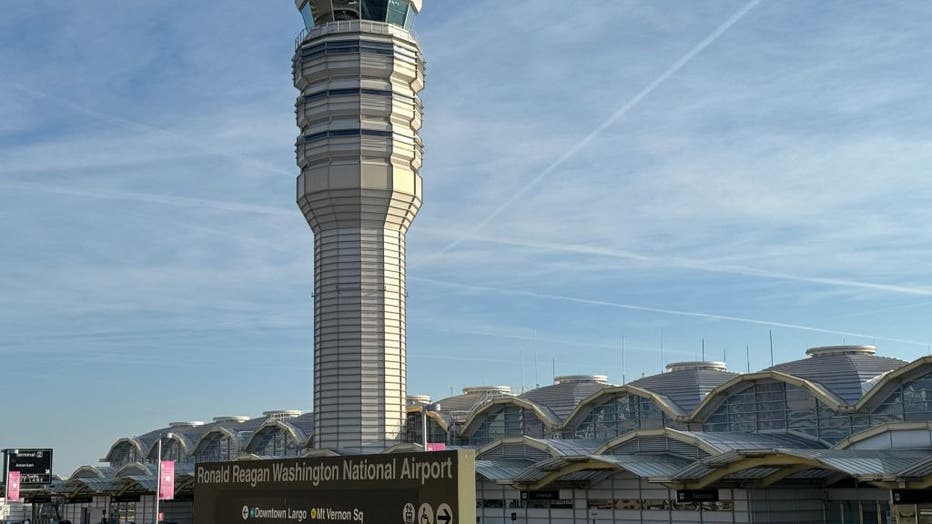
General view of Washington's Reagan National Airport (DCA) in Arlington, Virginia, on March 31, 2024. (Photo by Daniel SLIM / AFP) (Photo by DANIEL SLIM/AFP via Getty Images)
Even once funding is restored, the FAA faces steep staffing and safety-monitoring thresholds before it can lift flight-cap reductions. According to Politico, the FAA has not yet rescinded its emergency order mandating major flight cuts, and the agency says it will only dial back those restrictions when "system stress has adequately decreased."
What we know:
Airlines were ordered to cut daily domestic flights by 4% initially, with plans for reductions to 6% by Nov. 11, 8% by Nov. 13 and 10% by Nov. 14 at 40 major U.S. airports.
The FAA says delays and cancellations may persist for days if not a full week or more after the shutdown ends.
Even when controllers begin returning and back-pay is authorized, the accumulation of schedule disruptions, displaced aircraft and staffing gaps means airlines will likely struggle to resume "normal" operations immediately.
In an interview with CNN, pilot and aviation consultant Kit Darby said, "If we can’t get it done this week (to end the shutdown), we’re starting to get to the point where it won’t be fully recovered by Thanksgiving. I think if they do it this week, we can be very close to fully recovered by Thanksgiving."
What happens with SNAP benefits
The Supplemental Nutrition Assistance Program (SNAP) has been among the most closely watched concerns during the shutdown. When federal funding resumes, states will restart benefits as quickly as possible, including retroactive payments for those whose distributions were delayed.
The exact timeline will differ by state since each must reauthorize payments through its human services agency. In New York and New Jersey, officials say recipients should watch for direct updates from their state’s Office of Temporary and Disability Assistance or Department of Human Services for the precise timing of restored benefits.
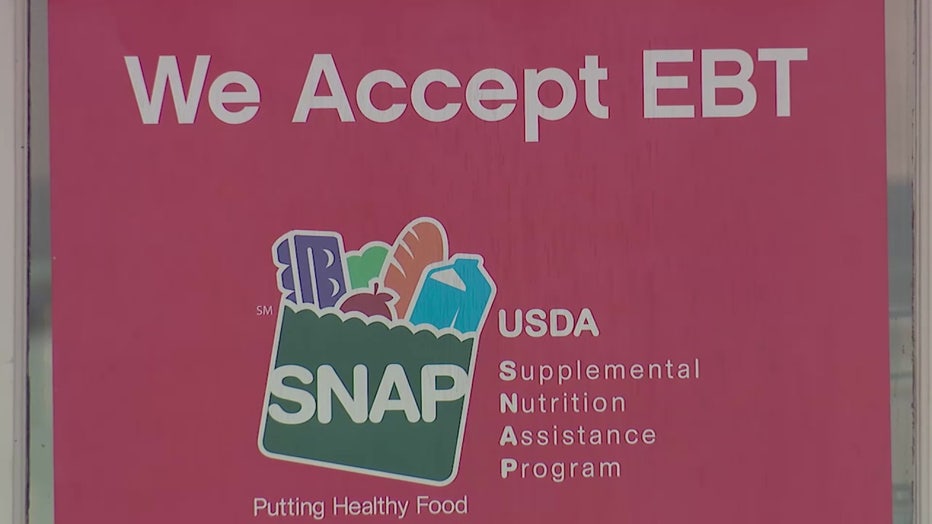
Signs for Supplemental Nutrition Assistance Program (SNAP) benefits.
Dig deeper:
Millions of Americans who rely on SNAP benefits to buy groceries are entering a third week without assistance as the shutdown drags on. The U.S. Supreme Court on Tuesday declined to order the full restoration of SNAP funding, leaving in place lower court rulings that temporarily blocked payments for November.
The decision means roughly one in eight Americans who depend on the program remain uncertain about when their benefits will resume. If Congress passes the funding bill expected to reach the president’s desk this week, it would immediately restore federal aid and end a bitter legal standoff that has deepened food insecurity across the country.
Reopening vs. restarting
Big picture view:
Reopening the federal government ends the shutdown, but restarting day-to-day operations across hundreds of agencies takes time. Some services, from passport renewals to federal courts, may see backlogs for weeks as agencies catch up.
For now, federal workers, travelers and families relying on assistance are waiting for one thing: the official sign-off that the government is fully back to work.
The Source: Reporting from FOX News, Federal News Network, Politico and Associated Press, and information from the U.S. Office of Personnel Management, Department of Transportation and U.S. Department of Agriculture were sourced in this article.