

Chesapeake Bay report card: C+ grade marks highest health score in 40 years
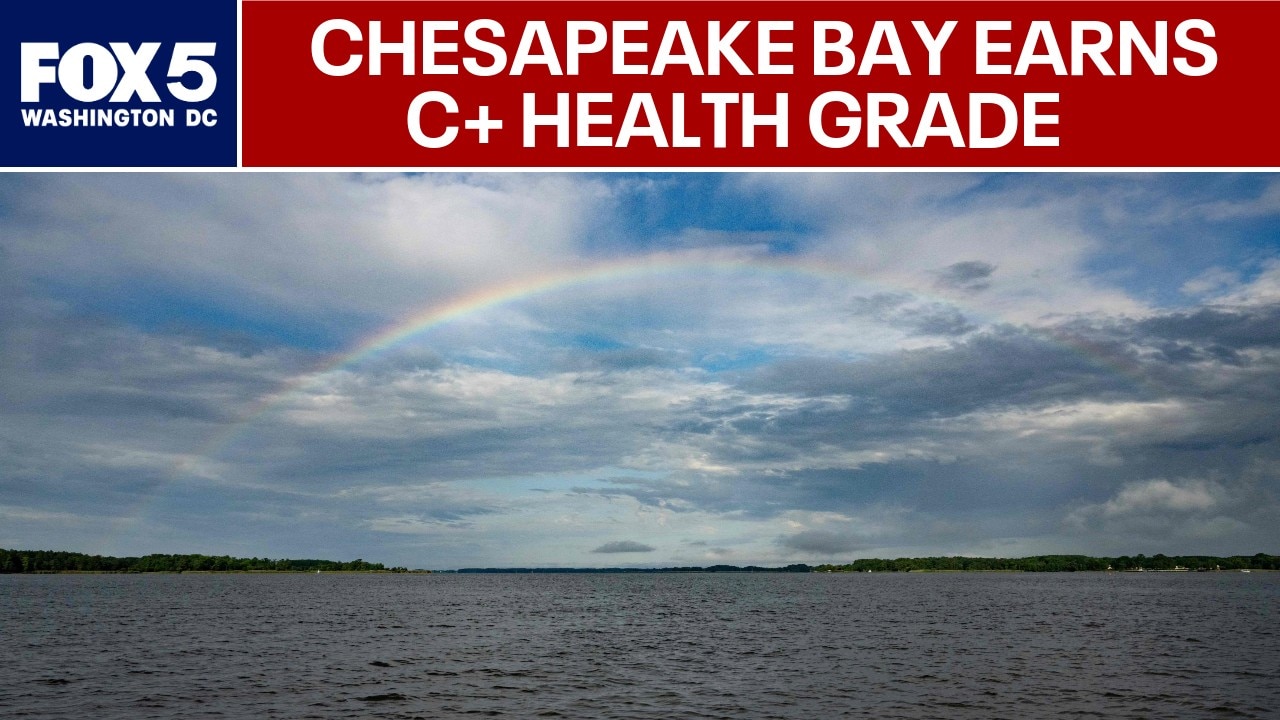
Chesapeake Bay earns highest health grade in 40 years
The Chesapeake Bay earned a C+ grade, the highest health score it has received in 40 years.
ANNAPOLIS, Md. - The Chesapeake Bay received a C+ grade on its latest report card, marking the highest overall health score recorded in 40 years.
The latest grade signals that long-term restoration efforts are making an impact.
What we know:
The grade comes from the annual "Chesapeake Bay and Watershed Report Card," published by the University of Maryland Center for Environmental Science. The evaluation tracks the health of the Bay and the interconnected waterways that feed into it, including the Potomac River.
According to officials, the 40-year-high mark indicates that long-term ecological trends are continuing to improve, and restoration work is yielding results.
Advocates welcomed the milestone while emphasizing that substantial work remains.
"The Chesapeake Bay is the jewel of our region. It’s what makes this region so special. It is also an economic engine," said Hilary Harp Falk of the Chesapeake Bay Foundation.
Falk noted that while "today is a celebration of a C+," it is "certainly not a grade that you want to rest on."
The broader Chesapeake Bay Watershed also earned a C+ grade (56%) for moderate socio-environmental health supported by strong performance in the ecology category, which earned a B grade.
Out of 23 reporting regions in the watershed, 22 scored in the C range and only one achieved a B- grade. The Upper James region posted the highest score with a B-, while the Choptank region recorded the lowest with a C-.
Among the three overall categories evaluated, ecological health performed highest with a B, whereas economic indicators lagged lowest at a C.
Potomac sewer line collapse
In addition to bay-wide metrics, the report card provides snapshots of rivers throughout the surrounding watershed. Notably, the report references a massive spill earlier this year that dumped millions of gallons of raw sewage into the Potomac River.
The report states that any impact from the sewage spill on regional water quality is expected to be reflected in the 2027 report card.
READ MORE | Potomac River returns to normal 9 months after sewer line collapse, DC Water says
Falk warned that the incident underscores widespread, aging infrastructure issues throughout the region.
"I think the Potomac spill was a huge wake-up call for the folks that live in and around the Potomac, but we’ve seen spills across the watershed from Harrisburg to Baltimore," Falk said. "I think there are a lot of old and leaky pipes that we need to be concerned about."
She added that conservationists remain deeply concerned about pollution entering the Chesapeake Bay from the various rivers and streams feeding into it.
Read the full report card online.
The Source: Information in this article comes from the University of Maryland Center for Environmental Science.