

What WSSC Water’s fluoride reduction means for your household
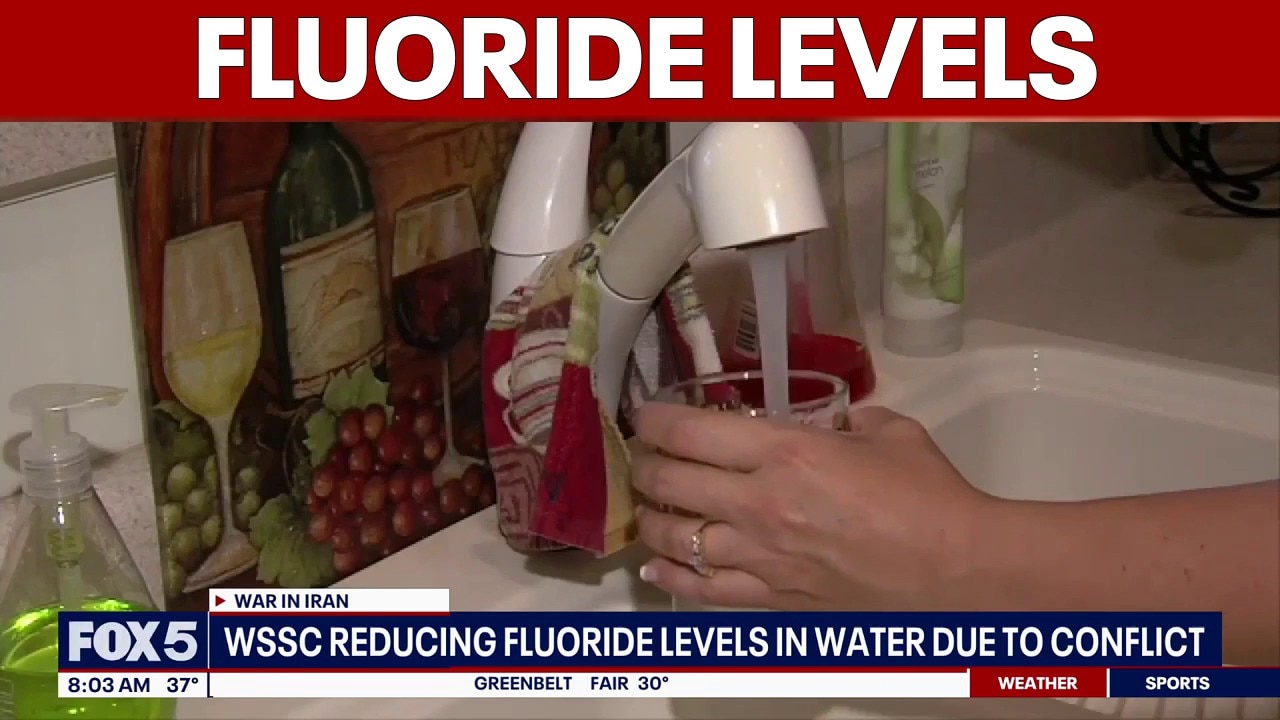
What WSSC Water’s fluoride reduction means for your household
WSSC Water is temporarily reducing fluoride levels in its drinking water for customers in Montgomery and Prince George’s counties, citing supply chain disruptions linked to the war in Iran.
LAUREL, Md. - WSSC Water is temporarily reducing fluoride levels in its drinking water for customers in Montgomery and Prince George’s counties, citing supply chain disruptions linked to the war in Iran.
READ MORE: WSSC says it's lowering fluoride levels in water due to conflict in Middle East
What we know:
The utility says one of the major suppliers of the chemical used for water fluoridation is based in Israel, and the conflict has affected its operations.
Fluoridation is a voluntary measure, though most U.S. utilities use it to help strengthen teeth and prevent cavities. The World Health Organization and the American Dental Association consider fluoride an important additive for dental health.
WSSC Water says the optimal fluoride level for communities that choose to fluoridate is 0.7 milligrams per liter. Because of the supply shortage, the utility is temporarily lowering that level to 0.4 milligrams per liter, nearly half the standard amount.
The American Dental Association says that some children may need additional fluoride treatments when community levels are reduced and recommends families consult their dentist.
WSSC Water emphasizes that drinking water remains clean and safe, and fluoride levels will return to normal once supplies become available again.
What this means for your family:
- WSSC Water is temporarily reducing fluoride levels because of supply chain disruptions linked to the war in Iran.
- A major supplier in Israel has had its operations affected by the conflict.
- Fluoride levels are dropping from 0.7 milligrams per liter to 0.4 milligrams per liter.
- Drinking water remains clean and safe, and levels will return to normal once supplies are available.
- More information online
The Source: Information in this article comes from WSSC Water.