

Tornado watch vs. warning: How to stay safe during severe weather

Risk of tornadoes in the DC region
FOX 5 meteorologist Matthew Cappucci examines the risk of tornadoes in the D.C. region!
WASHINGTON, D.C. - Tornadoes may be a rare occurrence in the Northeast, but it is still important to know when and how to stay safe when severe weather threatens your home.
Tornado watch vs. warning
What we know:
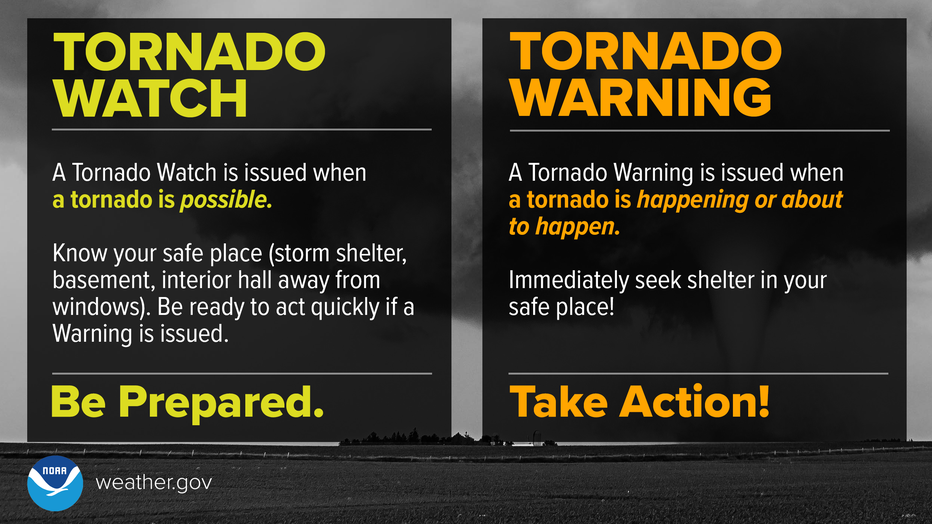
A tornado watch is issued if weather conditions favor thunderstorms capable of producing tornadoes in a region. You should watch for additional alerts and be prepared to seek shelter.
When a tornado has been sighted on the ground or is indicated by weather radar, a tornado warning is issued. You should seek shelter immediately.
Stay up to date with the latest alerts by signing up for AlertDC and following the National Weather Service.
How to prepare
What you can do:
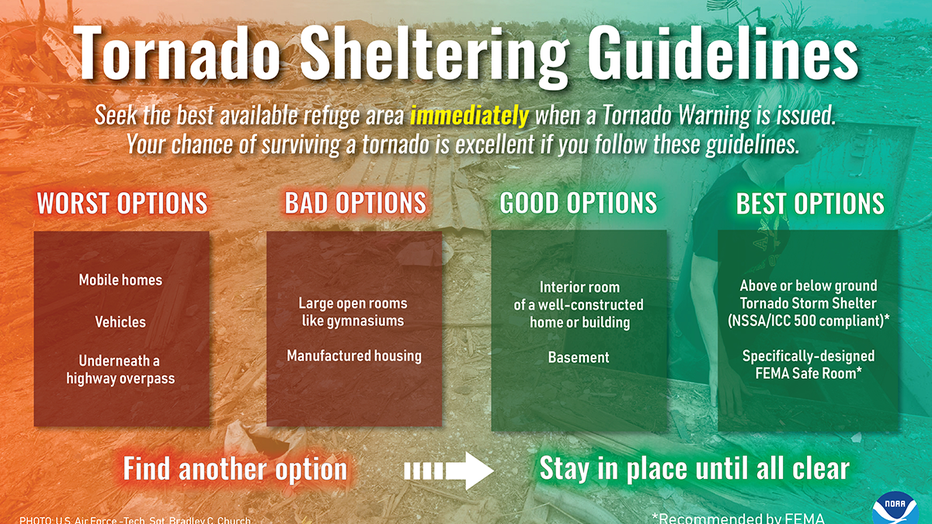
Before a potential tornado, the first step is making an emergency plan, which means having enough food and water to last at least three days, charging your devices, identifying a safe shelter and to make sure everyone knows where to go before the tornado hits.
Those in tornado watch areas are advised to review and discuss emergency plans, check supplies and review a safe room in case conditions change.
During a tornado warning, there is "imminent danger to life and property," according to the National Weather Service, who urges people to "move to an interior room on the lowest floor of a sturdy building and void windows."
Wearing a helmet and placing blankets, pillows or even a mattress over your body may protect you from debris.
After a tornado is over, stay indoors until it is safe to come out.
What to do if you're in a car
Dig deeper:
Many people believe stopping under a highway overpass during a tornado is safe, but it actually puts you at a greater risk of harm, according to the NWS.
Flying debris from the tornado's winds could seriously injure or kill you, and wind speeds could increase under the bridge.
Instead of driving to the closest overpass, experts say it's safer to remain inside your vehicle with your seatbelt fastened, keeping your head below the windows.
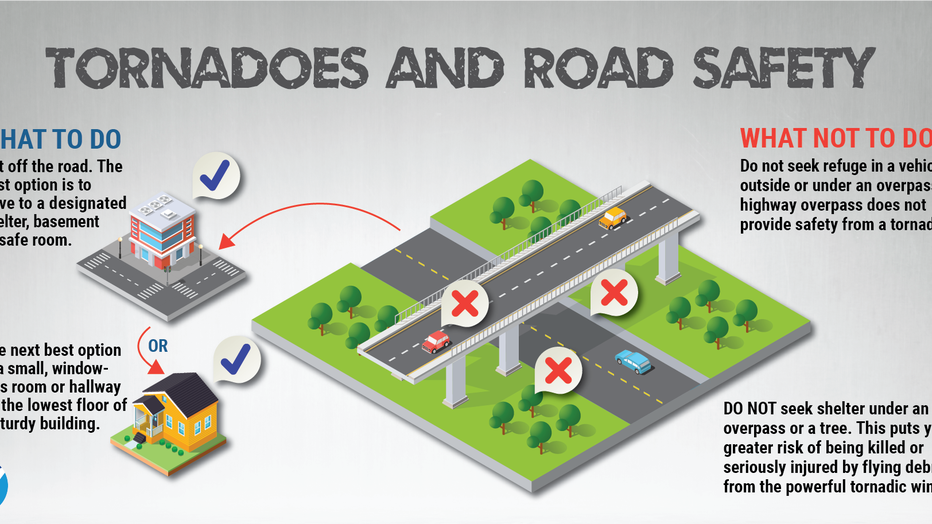
If there’s a lower area nearby, such as a ditch or depression, carefully leave the car and lie down there, shielding your head with your hands. However, getting to shelter safely is the best option.
The Source: Information from this article was provided by the National Weather Service and FOX News.