

DC Primary Election 2026: What voters need to know on Election Day
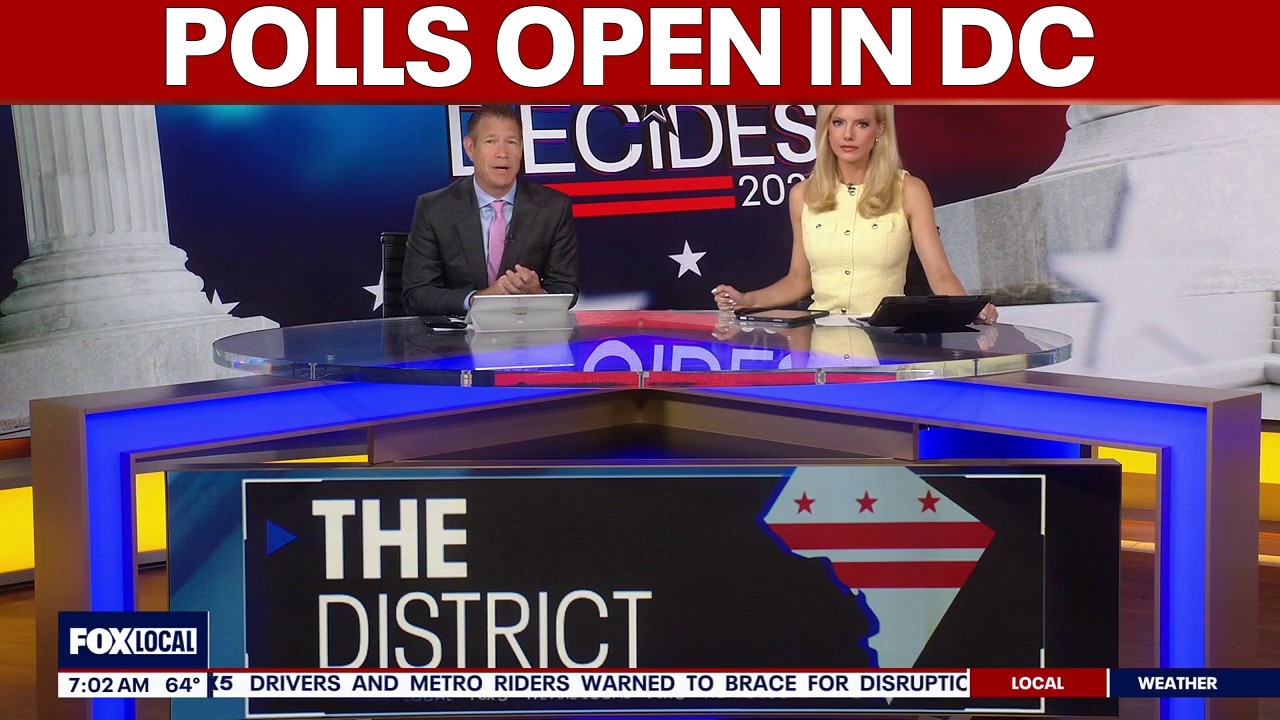
Polls open in DC for Primary Election 2026
It is officially Primary Day in the District of Columbia. Polls opened at 7 a.m. as voters choose candidates for mayor, attorney general, the D.C. Council and the city’s delegate to Congress. This election marks the first use of ranked choice voting in a citywide primary.
WASHINGTON - It is officially Primary Day in the District of Columbia. Polls opened at 7 a.m. as voters choose candidates for mayor, attorney general, the D.C. Council and the city’s delegate to Congress. This election marks the first use of ranked‑choice voting in a citywide primary.
Here’s what you need to know as you head to the polls.
Where can I vote in person in DC?
Visit any Vote Center on Election Day, June 16th.
When can I vote in the DC primary election?
Election Day is Tuesday, June 16. Vote centers will be open from 7 a.m. to 8 p.m.
RELATED: How to watch LIVE DC mayoral primary election results
What is Ranked Choice Voting?
In 2024, D.C. voters approved a ballot measure to adopt ranked-choice voting in the District. The D.C. Council later funded implementation of the system in the fiscal year 2026 budget.
Ranked-choice voting is a system in which voters rank candidates in order of preference rather than selecting a single candidate. Voters may rank up to five candidates.
Beginning with the June 2026 primary election, ranked-choice voting will be used in eligible contests with three or more candidates.
RELATED: Voting guide: How DC's new ranked choice voting ballot works
Sample ballots
Download sample ballots from the candidates below:
- Democratic Party: Ward 1 - Ward 2 - Ward 3 - Ward 4 - Ward 5 - Ward 6 - Ward 7 - Ward 8 - Federal
- Republican Party: Ward 1 - Ward 2 - Ward 3 - Ward 4 - Ward 5 - Ward 6 - Ward 7 - Ward 8 - Federal
- DC Statehood Green Party: Ward 1 - Ward 2 - Ward 3 - Ward 4 - Ward 5 - Ward 6 - Ward 7 - Ward 8 - Federal
Who is on the ballot in the DC primary election?
Mayor
The Democratic primary for mayor features a crowded field led by several current and former elected officials, community advocates, and business leaders.
- Janeese Lewis George (D) – Ward 4 councilmember first elected in 2020. Lewis George has centered her campaign on affordability, housing, childcare, public education, and lowering costs for working families.
- Kenyan McDuffie (D) – Former at-large councilmember and current chair of the Council’s Committee on Business and Economic Development. McDuffie has emphasized public safety, economic growth, job creation, and protecting D.C.’s Home Rule.
- Gary Goodweather (D) – Businessman and entrepreneur who has focused his campaign on government accountability, economic opportunity, and public safety.
- Vincent Orange – Former D.C. Council member and former D.C. Democratic Party chair who has highlighted his experience in city government and economic development.
- Rini Sampath (D) – Former student leader and policy advocate whose campaign has focused on housing affordability, education, and expanding opportunities for young residents.
- Hope Solomon (D) – Community activist and minister who has emphasized public safety, youth programs, and neighborhood investment.
- Ernest Johnson (D) – Community advocate whose campaign has focused on government reform, economic opportunity, and public services.
Delegate to the U.S. House of Representatives
D.C.‘s delegate serves as the District’s representative in Congress but cannot vote on final passage of legislation on the House floor.
- Robert White (D) – Current D.C. Council at-large member seeking the Democratic nomination. White has focused on housing, public safety, and government oversight during his time on the council.
- Brooke Pinto (D) – Current Ward 2 councilmember and chair of the Council’s Judiciary and Public Safety Committee. Pinto has made crime reduction, public safety, and criminal justice policy central issues of her campaign.
- Greg Jaczko (D) – Former chairman of the U.S. Nuclear Regulatory Commission who has highlighted federal policy experience, energy issues, and government reform.
- Kinney Zalesne (D) – Attorney and former federal government official whose campaign has emphasized voting rights, statehood, and federal representation for D.C. residents.
- Trent Holbrook (D) – Community advocate and businessman focused on economic opportunity, public safety, and representation for District residents.
- Kymone Freeman (G) – Activist, journalist, and Statehood Green Party candidate who has long advocated for D.C. statehood, voting rights, and local autonomy.
- Denise Rosado (R) – Republican candidate emphasizing public safety, economic issues, and expanded political representation for District residents.
Other races on the ballot
Depending on where you live, voters may also see races for:
- D.C. Council Chairman
- D.C. Council At-Large seats
- D.C. Council Ward races (Ward 1, 3, 5, and 6)
- At-Large Council special election
- Party committee positions
How can you register to vote in DC?
Online registration ended on May 26; however, D.C. does offer in person registration during early voting and on Election Day. To register when you vote, you must provide proof of residence that shows your name and current District of Columbia address.
You can check if you’re registered at:
Voter Registration Application
Proof of residence documentation includes:
- A copy of a current and valid government-issued photo identification
- A utility bill for water, gas, electricity, cable, internet, telephone, or cellular phone service issued no earlier than 90 days before the election
- A savings, checking, credit, or money market account statement from a bank or credit union issued no earlier than 90 days before the election
- A paycheck, stub, or earning statement that includes the employer’s name, address, and telephone number and was issued no earlier than 90 days before the election
- A government-issued document or check from a federal or District agency, other than the Board of Elections, issued no earlier than 90 days before the election
- A current residential lease or rental agreement
- An occupancy statement from a District homeless shelter issued no earlier than 90 days before the election
- A tuition or housing bill from a District of Columbia college or university issued for the current academic or housing term
How do I vote on a mail-in ballot in DC?
All registered voters will be mailed a ballot.
Instructions on how to vote should be included along with your ballot.
Your voted and mailed ballot must be postmarked or demonstrated to have been sent on or before Election Day and has to arrive no later than the 10th day after Election.
How can I track my ballot in DC?
D.C. offers ballot tracking so voters can confirm when their mail‑in ballot is sent, received, and accepted for counting.
Voters can use the Ballot Tracker to check the status of their mailed ballot after it has been returned.
Ballots must be postmarked on or before Election Day and must arrive no later than the 10th day after the election to be counted.
The Source: Information in this article comes from the Associated Press, the District of Columbia Board of Elections and previous FOX 5 reporting.