

2 dozen states sue Trump over his latest round of global tariffs
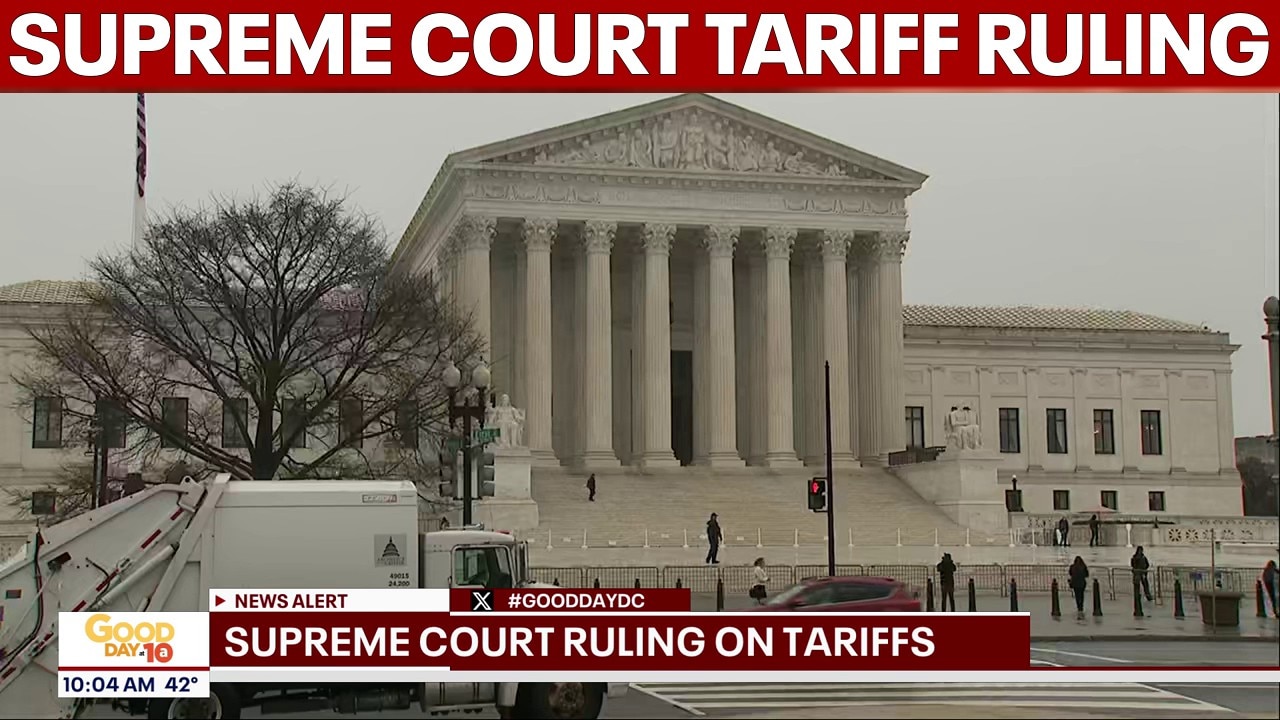
Supreme Court strikes down Trump tariffs
The Supreme Court has struck down President Donald Trump’s sweeping tariff policy, disrupting a key part of his economic agenda.
WASHINGTON - A group of 24 states sued the Trump administration on Thursday over its latest round of global tariffs.
The lawsuit, led by New York, Oregon, California and Arizona, specifically asks the U.S. Court of International Trade to block the implementation of the tariffs completely by declaring them illegal. It additionally seeks a full refund from the federal government for states affected by them while they were in place.
The lawsuit includes attorneys general from Connecticut, Delaware, Illinois, Maine, Massachusetts, Michigan, Minnesota, Nevada, New Jersey, New Mexico, North Carolina, Rhode Island, Vermont, Virginia, Washington and Wisconsin, as well as the governors of Kentucky and Pennsylvania.
What they're saying:
"The focus right now should be on paying people back, not doubling down on illegal tariffs," Oregon Attorney General Dan Rayfield said in a statement. "People are already making hard choices about what to put in their shopping cart. Prices on basics like groceries, clothing and other essentials have all been skyrocketing. At some point, the bills become unmanageable."
"Once again, President Trump is ignoring the law and the Constitution to effectively raise taxes on consumers and small businesses," New York Attorney General Letitia James added in her own statement.
White House responds
The other side:
White House spokesperson Kush Desai told The Associated Press that "the president is using his authority granted by Congress to address fundamental international payments problems and to deal with our country’s large and serious balance-of-payments deficits."
"The administration will vigorously defend the president’s action in court," he added.
Supreme Court ruling
The backstory:
The lawsuit follows a Feb. 20 Supreme Court ruling that the International Emergency Economic Powers Act (IEEPA) does not give President Donald Trump authority to impose global tariffs.
According to the Supreme Court majority, it is unconstitutional for the president to unilaterally set and change tariffs, as the Constitution assigns taxation power solely to Congress.
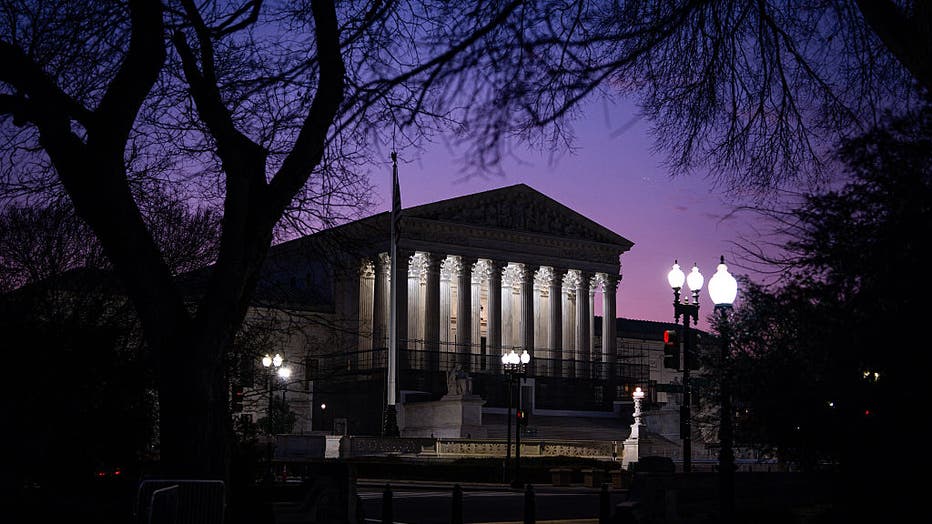
The U.S. Supreme Court in Washington, D.C., on Friday, Jan. 9, 2026. (Photographer: Al Drago/Bloomberg via Getty Images)
"The Framers did not vest any part of the taxing power in the Executive Branch," Chief Justice John Roberts wrote.
In response, Trump announced a 10% global tariff and said national security tariffs under Section 232 of the Trade Expansion Act of 1962 would remain in effect.
He soon signed an executive order invoking Section 122 of the Trade Act of 1974, which allows the president to impose tariffs for up to 150 days to address large and serious balance-of-payments deficits—a provision rarely used and never at this scale. The statute permits tariffs of up to 15% on imports during that period.
Dig deeper:
A press release from New York Attorney General Letitia James’ office said the U.S. trade deficit "is not a legitimate reason for imposing tariffs under Section 122."
"In fact, the administration admitted during the lawsuit over the IEEPA tariffs that trade deficits ‘are conceptually distinct from balance-of-payments deficits,’" the release said.
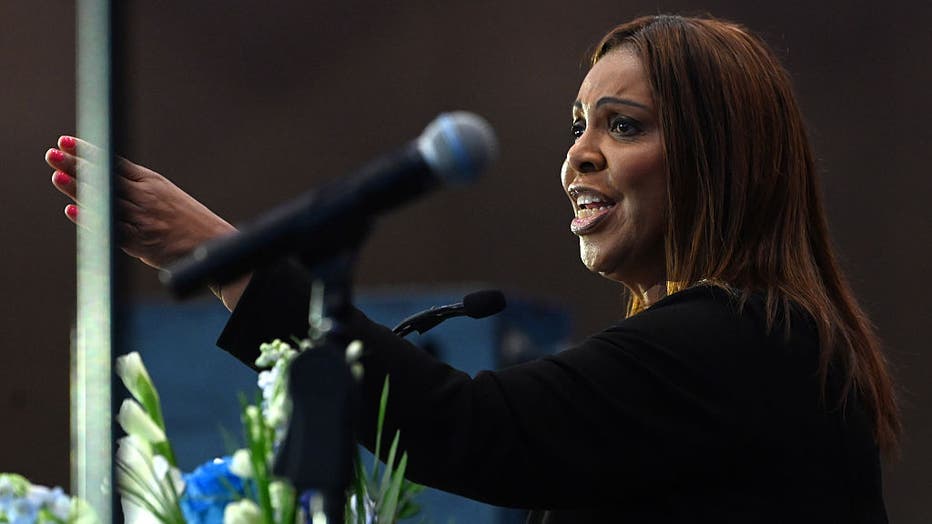
Attorney General Letitia James spoke at a church service during the New York State Association of Black, Puerto Rican, Hispanic, and Asian Legislators’ 55th Annual Conference at the Albany Capital Center on Sunday, February 15, 2026. (Lori Van Buren/
According to the states’ lawsuit, Trump’s tariffs violate Section 122 because they are applied inconsistently and effectively discriminate between countries. The states also contend that the tariffs exceed the president’s constitutional authority and represent executive overreach.
"Yet the new tariffs exempt many goods from Canada, Mexico, Costa Rica, the Dominican Republic, El Salvador, Guatemala, Honduras and Nicaragua," the press release said. "They also include 84 pages of specific product exemptions."
The states’ legal filing further argues that Section 122 was intended only for limited, short-term emergencies and was not meant to serve as a tool for broad, sweeping trade policy.
The case also occurs amid ongoing litigation in the Court of International Trade, where businesses are seeking refunds for tariffs previously imposed under IEEPA. That process has already begun, highlighting the broader financial impact of these tariffs.
The Source: Information above was sourced from several press releases, FOX Local, the Retail Industry Leaders Association, The American Presidency Project, DLA Piper Global Law Firm and Husch Blackwell.