

Why your plastic trash bags are sending tons of good local recycling straight to the landfill
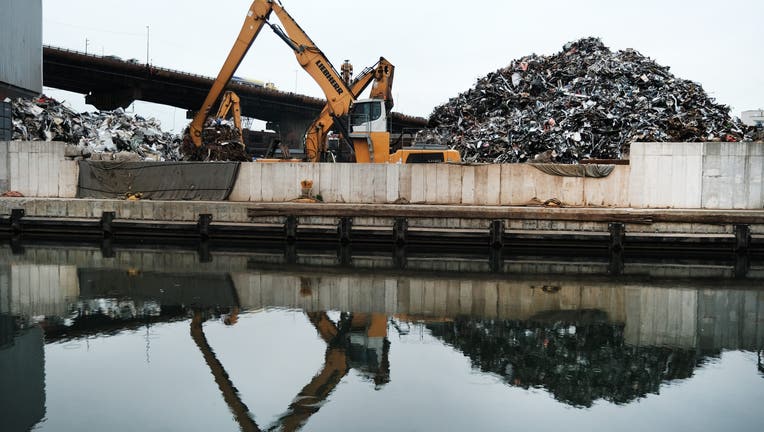
NEW YORK, NEW YORK - MAY 03: A metals recycling plant stands in Brooklyn on May 03, 2021 in New York City. Businesses in the building, service, hospitality and retail sectors are seeing solid growth as the U.S. economy surges out of the Covid-19 slo
PHILADELPHIA - Even when people try to do the right thing, more than half of all readily recyclable material in the U.S. never gets recovered—resulting in steep financial penalties for local communities and apartment buildings when contaminated loads are sent straight to the landfill.
Plastic trash bags are a leading cause of recycling rejection, acting as "tanglers" that wrap around sorting machinery and force facilities to shut down. Material recovery facilities do not have the time or safety clearance to rip open sealed trash bags on a fast-moving conveyor belt, meaning workers simply treat the entire bag as household trash and send it to a landfill. When loose plastic bags enter the sorting stream, they wrap around gears and screens, forcing facilities to shut down multiple times a day to manually cut the plastic out.
WATCH: Video breakdown of the plastic trash bag recycling problem
Waste haulers are increasingly tacking on contamination penalties that can exceed $100 per ton when entire loads have to be redirected to landfills.
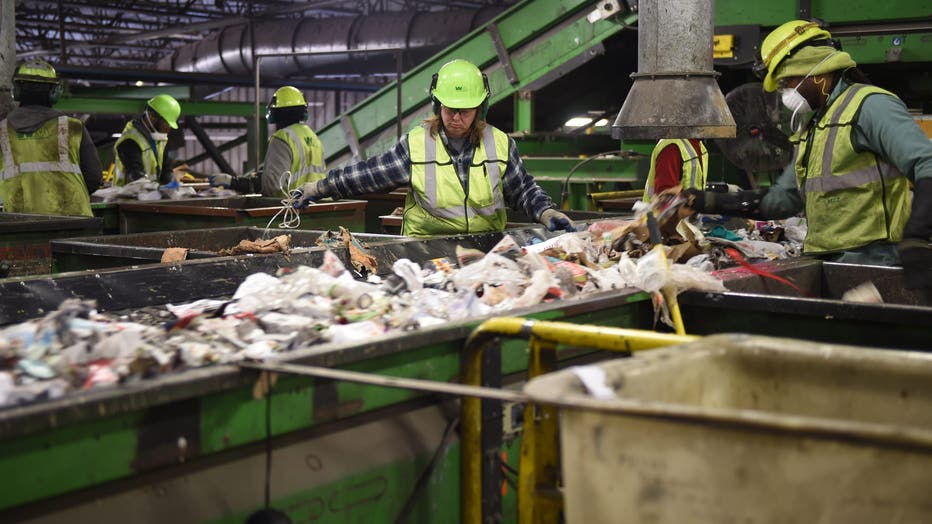
Workers remove non-recyclable materials at Waste Management's Philadelphia Material Recovery Facility (MRF) Wednesday.1/25/2017 Recycling Waste Management Philadelphia MRF Photo by Lauren A. Little (Photo By Lauren A. Little/MediaNews Group/Reading
According to The Recycling Partnership's 2026 State of Recycling Report, the U.S. residential recycling system currently fails to recover even half of the readily recyclable packaging and paper generated nationwide. While the average household generates roughly 705 pounds of recyclable packaging and printed paper each year, participant capture rates for recyclable containers remain below 60%—and mixed paper is captured less than half the time. The report also notes that residential recycling streams face an estimated 17% inbound contamination rate, with multifamily housing facing significant access and participation barriers and growing volumes of lightweight film and flexible plastics adding sorting challenges and contamination risk.
Other major hazards
The other side:
Beyond plastic bags, facilities battle several major contaminants that ruin the financial viability of recycling:
- Food and liquid residue: Cardboard and paper are the highest-value materials in the bin. A single half-full soda can or a greasy pizza box will soak the paper around it. Once paper rots or becomes soaked in grease, it cannot be recycled.
- Lithium batteries: Discarded electronics and batteries frequently spark and cause massive fires inside hauling trucks and processing centers.
- "Wish-cycling": People often treat any open bin as a standard dumpster, throwing in broken furniture or household items that destroy sorting machinery.
Where the material goes
Local perspective:
When a hauler empties a recycling dumpster, it goes to a regional hub. In New York City, materials head to the Sims Municipal Recycling Sunset Park Material Recovery Facility in Brooklyn, the largest commingled recycling facility in the country. In Philadelphia, the waste stream feeds local industries like Newman Paperboard, which has manufactured recycled paperboard in the city for over 100 years, or glass processors in Delaware County.
However, if a hauling team "eyeballs" a bin and sees a high concentration of plastic bags or food waste, they often classify the entire load as contaminated on the spot. The truck then bypasses the recycling facility entirely and goes directly to a landfill or an incinerator.
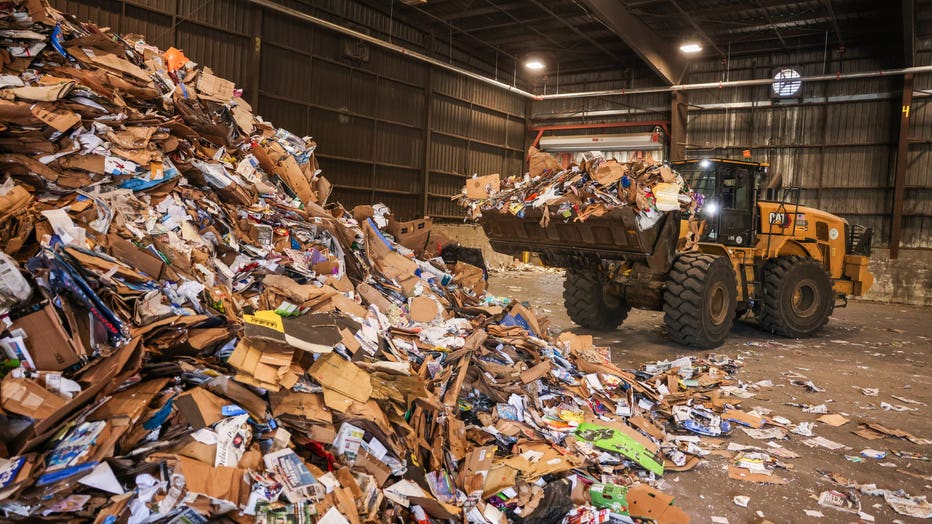
Bohemia, N.Y.: Cardboard and paper materials are sorted and loaded into a trailer at the Town of Islip multi-purpose recycling facility in Bohemia, New York, July 24, 2025. (Photo by Steve Pfost/Newsday RM via Getty Images)
The financial cost
By the numbers:
Waste haulers rarely cancel contracts over high contamination. Instead, they use it to generate additional revenue through steep penalties.
Commercial waste contracts—which cover everything from apartment complexes and corporate campuses to public venues—heavily favor the hauler. If a location continuously recycles improperly, haulers will often refuse pickup, placing a bright sticker on the bin until maintenance staff manually digs out the trash.
Haulers also automatically tack on fines, often ranging from $50 to over $100 per ton of contaminated waste, directly onto monthly invoices.
Editor's Note: An earlier version of this article included inaccurate recycling contamination statistics and misattributed data to The Recycling Partnership’s 2026 State of Recycling Report. The story has been updated to remove the unverified figures and accurately reflect the report's findings on U.S. residential recycling recovery.
The Source: This article was written using information from The Recycling Partnership's State of Recycling report, Sims Municipal Recycling, and Newman Paperboard.