

Washington DC weather: Severe weather, tornado risk Monday in DC region

Washington DC weather: Storms, tornado threat Monday
A warm end to the weekend will lead to severe weather threats on Monday, with storms, wind, tornadoes and even potentially some snow further north.
WASHINGTON - Less than a week removed from Washington, D.C.'s largest 24-hour temperature drop on record, more severe weather is expected in the DMV Monday, with threats of severe thunderstorms and even tornadoes.
Thunderstorm, tornado risk Monday
What we know:
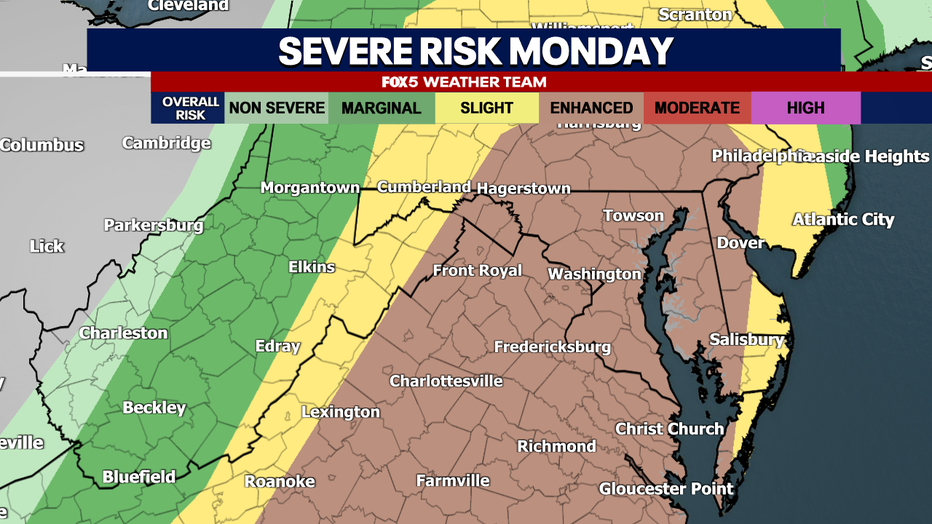
The FOX 5 Weather Team is monitoring the potential for strong to severe thunderstorms across the DC region on Monday, March 16, as a powerful storm system moves east toward the Mid-Atlantic.
On Friday, the National Weather Service's Storm Prediction Center placed much of the Mid-Atlantic region into a rare "enhanced risk" zone for severe weather on Monday: a three out of five on their risk scale. On Saturday, the NWS said it hasn't ruled out the possibility of bumping the risk level up to a 4 out of 5 as we approach Monday, particularly from South Carolina to Maryland.
Those areas are where, the NWS says, there is the highest potential Monday for "strong tornadoes and significant damaging winds… specifically in the late morning to afternoon."
Monday rain timeline: morning rain, afternoon storms
Timeline:
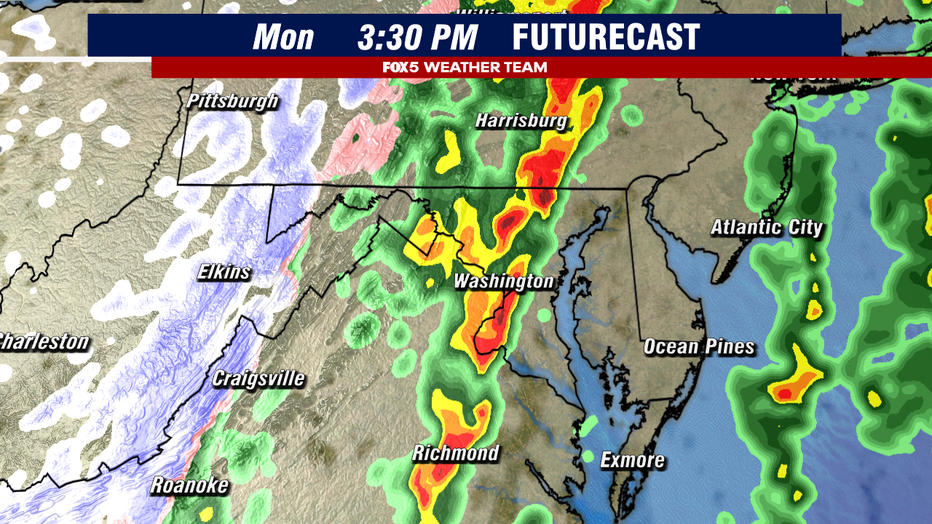
Current projections suggest rain starting Monday morning, with greater concern for stronger storms later in the day, especially Monday afternoon into Monday evening as a strong cold front approaches the region.
That timing could bring storms through the area during the evening commute, potentially slowing travel.
Damaging winds the biggest threat
Why you should care:
If the storms can strengthen, the main severe weather threat will be damaging wind gusts that could potentially exceed 60 mph.
There is concern that wind damage from Monday's storms could be more widespread than what the region saw this past Wednesday. That's because of an elevated risk of a squall line, a line of gusty thunderstorms which would have the potential for more widespread damage than more isolated storm cells.
Other possible impacts include:
- Isolated tornadoes
- Frequent lightning
- Heavy downpours that could briefly reduce visibility
Even before the storm gets here, gusty winds could pick up Monday as the system approaches, increasing the risk of falling tree limbs and power outages.
Why are forecasters watching this system?
Dig deeper:
The setup of this system includes several ingredients that can support stronger storms in the Mid-Atlantic:
- Warm, moist air surging north ahead of the cold front
- Strong winds in the upper atmosphere
- A dynamic storm system moving across the eastern U.S.
When these things overlap, thunderstorms can organize into lines capable of producing damaging wind gusts.
Forecast uncertainty
What we don't know:
While this system has the potential to bring damaging storms across the region, there are still some potential factors that could limit their severity in the DC metro area.
Early clouds and rain could reduce instability, making it harder for storms to intensify. The strongest severe weather could also stay south of the region, closer to the Carolinas and central Virginia.
After the storms
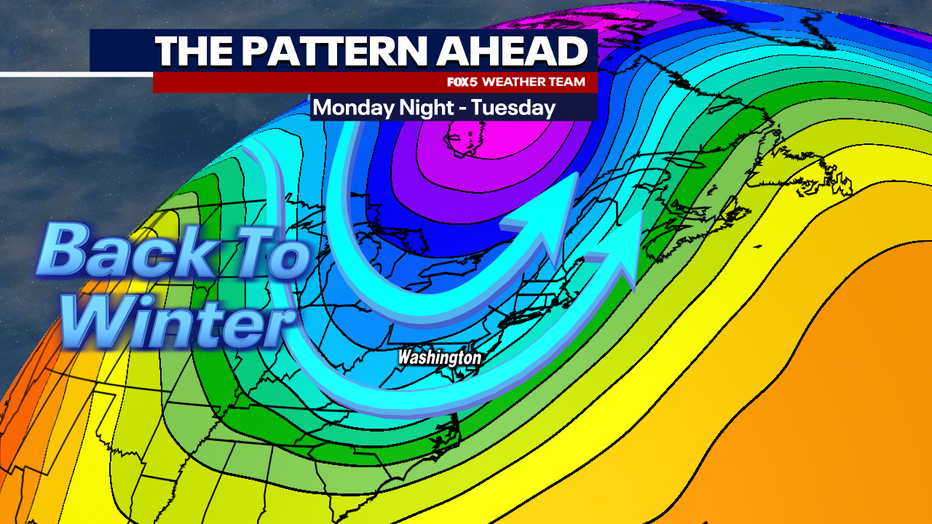
A strong trough associated with a late-season polar vortex in Canada will bring colder weather back to the D.C. region for the middle of next week.
What's next:
Behind the cold front, much cooler and breezy conditions are expected to move into the region on Monday night into Tuesday, bringing a noticeable drop in temperatures after the storm system passes.
St. Patrick’s Day on Tuesday will feel much more like winter than spring, with many suburbs likely struggling to make it out of the 30s most of the day. Winds will likely remain quite blustery as well.
The Source: Information in this story is from the FOX 5 Weather Team and the National Weather Service Storm Prediction Center.