

Thousands of Americans stranded in Middle East as Iran conflict disrupts travel

House narrowly rejects vote on War Powers Act
The House of Representatives rejected on Thursday a resolution to end Trump's attack on Iran.
WASHINGTON, D.C. - As the war with Iran continues, the impact is stretching far beyond the battlefield — grounding flights, closing airspace and leaving thousands of Americans stranded overseas.

Thousands of Americans stranded in Middle East as Iran conflict disrupts travel
As the war with Iran continues, the impact is stretching far beyond the battlefield — grounding flights, closing airspace and leaving thousands of Americans stranded overseas.
What we know:
Widespread airspace closures and flight cancellations across parts of the Middle East have disrupted travel for tens of thousands of passengers, including Americans trying to return home.
White House Press Secretary Karoline Leavitt said the administration has already assisted thousands of Americans in leaving the region.
"Since the launch of Operation Epic Fury, more than 17,500 Americans have safely returned home from the Middle East, with over 8,500 American citizens returning to the United States just yesterday alone," Leavitt said.
She added that evacuation efforts will continue.
"The Trump administration will not rest until every American has been brought home safely and until the terrorist threat from Iran has been completely destroyed," Leavitt said.
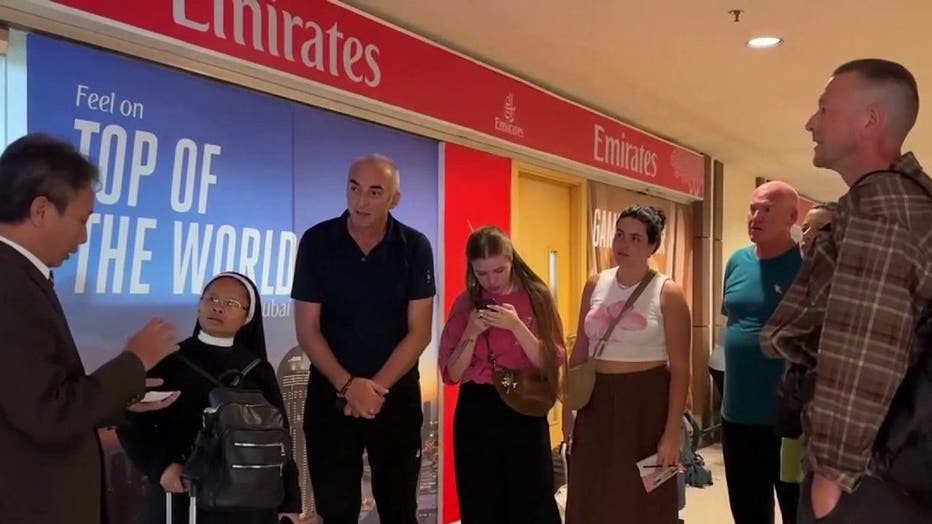
DC-area residents stranded
Among those still overseas are two Americans from Virginia who say they are waiting for clearer direction from U.S. officials.
Anjali Sharma of Arlington has been stranded in Qatar for nearly a week.
Sharma was traveling to India for a family wedding with a layover in Doha when fighting escalated in Iran. Soon after, missile strikes and security concerns led multiple countries in the region to shut down portions of their airspace, triggering thousands of flight cancellations.
She said she has registered with the State Department and spoken with officials but has not received detailed information about evacuation plans.
For now, she and other stranded travelers remain at a hotel in Doha.
"We can hear missiles from where we are. We’re hearing them every day," Sharma said.
"There’s thousands of us stuck here and we just want to come home. I think we’re all just looking for a message on how we’re getting out — what the plan actually is. We don’t want back-and-forth and uncertainty. We would like a clear line of communication on if there’s going to be an evacuation plan and what it will exactly be."
Featured
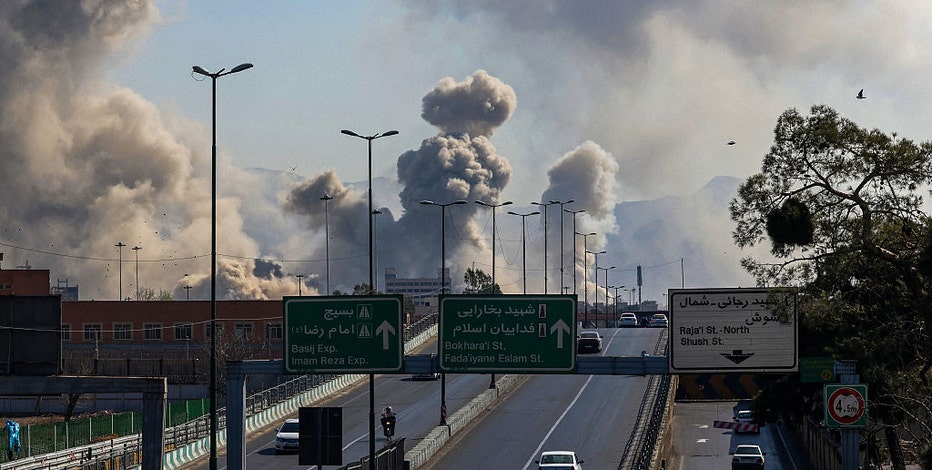
Live updates: Iran attacks Israel and US bases as war intensifies
Iran attacked Israel and American bases on Thursday and has threatened the United States for torpedoing an Iranian warship in the Indian Ocean.
State Department guidance
The U.S. State Department is urging Americans in the Middle East to register with the Smart Traveler Enrollment Program (STEP) at step.state.gov.
Officials say enrolling allows U.S. embassies to provide security alerts and share potential evacuation information.
Authorities say ongoing security concerns have forced multiple countries — particularly in parts of the Gulf region — to restrict or close airspace, leading to thousands of canceled flights.
Lawmakers respond
Back in Washington, members of Congress say their offices are hearing from concerned families.
Virginia Congressman Suhas Subramanyam said his office is assisting constituents trying to leave the region but believes more preparation was needed.
"The reality is that this administration was not prepared for this," Subramanyam said. "What we’re trying to do now is ensure that people get out of the region because it’s not safe right now."
He warned the conflict could escalate further.
"We believe that this conflict will escalate, and we believe that tourist locations — hotels, places where Americans stay — are actually targets right now of Iran," he said.
What stranded Americans should do
Subramanyam is urging Virginians stranded abroad to contact his office as staff coordinate with federal agencies.
Meanwhile, the White House and State Department are again urging Americans in the region to register with STEP so officials can provide updates, security alerts and potential evacuation plans.
The Source: This article was written using statements from the White House, the U.S. State Department, and interviews with affected travelers and Virginia Congressman Suhas Subramanyam.