

New Army report reveals systemic failures leading to deadly DCA mid-air collision
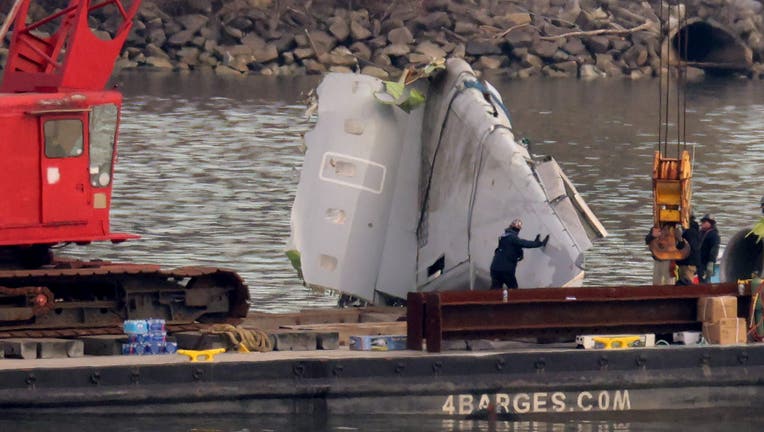
WASHINGTON - A new Army report revealed a series of systemic failures that led to a midair collision between an American Airlines jet and an Army Black Hawk helicopter near Reagan National Airport in January 2025.
What we know:
Sixty-seven people died in the collision, making it the deadliest U.S. aviation accident since 2001.
For months, families of the victims of Flight 5342 have been begging for accountability from the Army. The newly released findings raise new questions about whether the disaster could have been prevented.
The report identifies several critical issues, including problems with altitude readings on older Black Hawk helicopters, gaps in pilot training and the absence of a formal system for tracking dangerous near-misses in the crowded Washington, D.C. airspace.
The investigation found that the Black Hawk helicopter was not equipped with a barometric altimeter capable of providing an accurate altitude reading, and its performance was affected by weather and configuration. The helicopter also lacked a traffic alert and collision avoidance system and was unable to broadcast its location.
READ MORE | Proposed bill would limit flights to address 'hazardous overcrowding' of DCA airspace
The report also pointed to a lack of adequate training for pilots navigating the heavily congested airspace, as well as a failure to track close calls.
The investigation highlighted that the two flight routes intersected at a critical point with only 75 feet of separation, leaving virtually no margin for error.
"Overall, this happens in the NTSB report too, but these two routes intersected at a really critical point of flight and only separated by 75 feet, gave no margin for error, and cost 67 people their lives," said Washington Post reporter Tara Copp.
The Army launched its investigation after the National Transportation Safety Board (NTSB) held hearings held last summer, where initial details about the collision were brought to light.
While the Army acknowledged widespread safety failures in its report, it did not detail any disciplinary action.
What they're saying:
For the families of the victims, the findings underscore ongoing concerns about air safety in the nation's capital.
"Runs through our minds every day, unfortunately, and anybody that is currently flying it should be running through theirs because all of the same issues except for a few are happening right now today as we speak. Every time I get on an airplane in the D.C. area, but probably in a lot of other areas in the national airspace," said Amy Hunter, a family member of a passenger who died in the collision.
The report comes as Congress considers a broad aviation safety bill.
A central point of debate is whether military aircraft should be required to equip ADS-B Out technology, which broadcasts an aircraft's location to nearby planes. Relatives of the victims said they will continue fighting for this requirement to be enacted into law.
The Source: Information in this article is from an Army report.