

Daylight Saving Time: Virginia waiting on Maryland, DC to get rid of it

A clock is seen in LAquila, Italy, on March 24, 2023. On march 26th (last march sunday) solar time will replace daylight saving time and people around the world will move one hour ahead hands of clocks. (Photo by Lorenzo Di Cola/NurPhoto via Getty I
WASHINGTON, D.C. - As daylight saving time approaches, the argument to make it permanent in the United States has resurfaced yet again.
What we know:
The Virginia Senate passed a bill last month to end the state's observance of daylight saving time, moving to Eastern Standard Time year-round.
It will now move onto the House. However, Maryland and Washington, D.C., must enact similar legislation before the law can go into effect.
Lawmakers in Maryland have repeatedly tried to make daylight saving time permanent for the state with bills contingent on changes to federal law. A similar bill was introduced in the Virginia House last year.
States can currently lock their clocks to permanent standard time, but are prohibited from switching to permanent daylight saving time without an act of Congress.
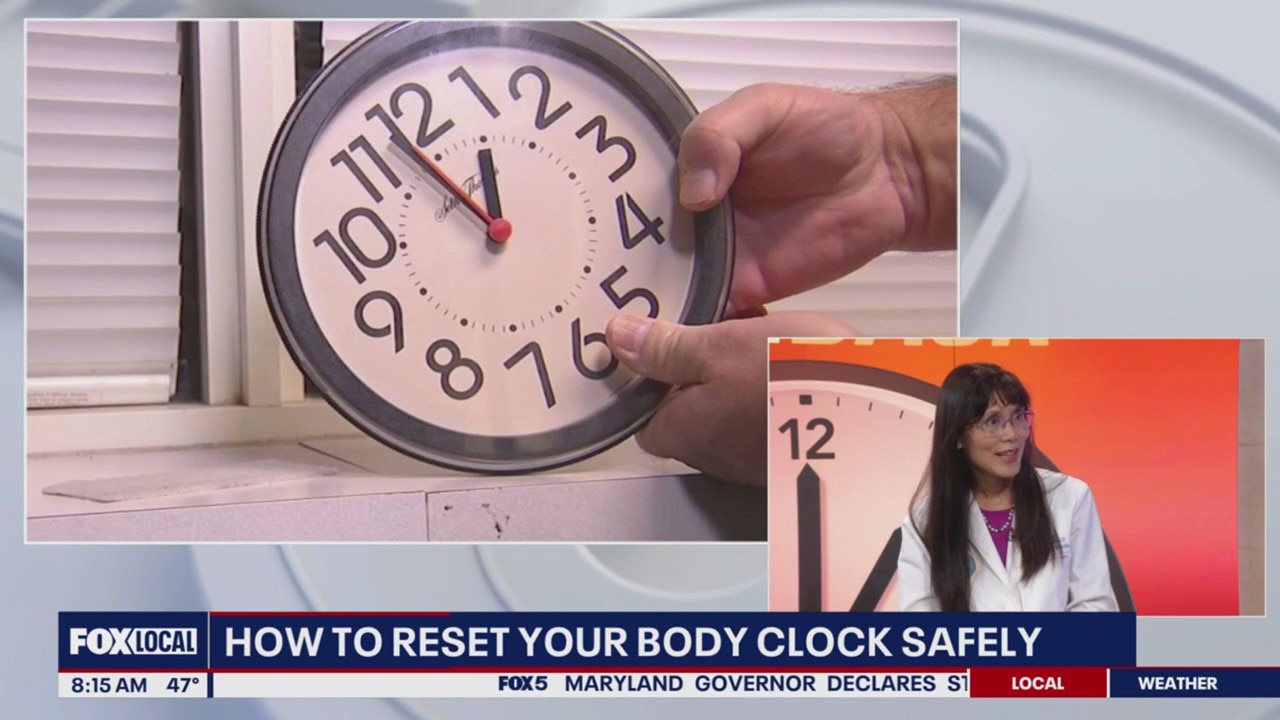
Daylight saving time: How to adjust to setting the clocks back
Daylight saving time ends Sunday, and experts warn the transition can temporarily disrupt your sleep cycle. Dr. Julie Chen, internal medicine director at Kaiser Permanente, joins FOX 5 with tips on how to adjust.
Two states do not ‘spring forward’
Big picture view:
Hawaii and Arizona are currently the only two states in the U.S. that don't participate in daylight saving time.
Most of Arizona has remained on Mountain Standard Time year-round since 1968 due to its hot climate. However, the state's Navajo Nation does still observe daylight saving time.
Hawaii has used Hawaii Standard Time all year since 1967 due to its proximity to the equator.
The U.S. territories of American Samoa, Guam, the Northern Mariana Islands, Puerto Rico and the U.S. Virgin Islands also do not observe daylight saving time.
What is daylight saving time?
Dig deeper:
Daylight saving time requires most U.S. states and territories to set their clocks forward one hour on the second Sunday of March, and back one hour on the first Sunday of November.
It was first introduced on a national level in 1918 in an effort to conserve fuel by extending daylight working hours during the last year of World War I. In 1966, Congress passed the Uniform Time Act to institute permanent time changes in the spring and fall.

Tips to adjust to the daylight saving time clock change
Adjusting to daylight saving time can take about a week as the body adapts to new sleep times and circadian rhythms. Here are some tips to ease this transition.
What do Americans want?
By the numbers:
A 2025 Gallup survey found that the majority of Americans wanted to get rid of daylight saving time. Results showed 54% were not in favor of daylight saving time, 40% were in favor and 6% were uncertain.
Trump on daylight saving time
What they're saying:
President Donald Trump has previously said that he supports making daylight saving time permanent in the U.S.
"The Republican Party will use its best efforts to eliminate Daylight Saving Time, which has a small but strong constituency, but shouldn’t," Trump wrote on X in December 2024. "Daylight Saving Time is inconvenient, and very costly to our Nation."
In 2025, the president called it a "50-50 issue" before calling on lawmakers to "push hard for more daylight at the end of a day."
The Source: Information from this article was sourced from local legislation, USA Today and Gallup.