

Road salt pollution reaches toxic levels in Loudoun County streams, report finds
VIRGINIA - Road salt pollution is leaving some Loudoun County streams with chloride levels considered harmful to aquatic life, according to a new report from the Loudoun Wildlife Conservancy.
What the report found
The conservancy’s Salt Watch program collected 929 chloride tests at 71 sites across 21 streams between July 2024 and June 2025.
Across the full monitoring year, about one in four tests from urban streams exceeded the Environmental Protection Agency’s chronic toxicity threshold of 230 parts per million. None of the tests from rural streams exceeded that threshold.
The report’s map on page 1 shows the most persistent contamination concentrated around urban areas near Leesburg and Ashburn. Twenty-three monitoring sites exceeded the chronic toxicity threshold more than 10% of the time.
Chloride levels peaked after winter storms
The highest readings followed winter salt use in January and February 2025.
About 39% of urban stream tests exceeded the chronic toxicity threshold in January. That figure rose to 71% in February before falling to 34% in March and 25% in April, according to the report’s monthly chart.
Three locations also recorded levels above the EPA’s acute toxicity threshold of 860 parts per million, which the report says can kill freshwater organisms within an hour:
- Town Branch: 3,715 parts per million
- Cattail Branch: 2,074 parts per million
- Beaverdam Run: 896 parts per million
The salt in our streamsLoudoun Wildlife Conservancy’s Salt Watch Program
Why salt remains in streams
Road salt applied to streets, sidewalks and parking lots can wash into storm drains and flow untreated into nearby waterways.
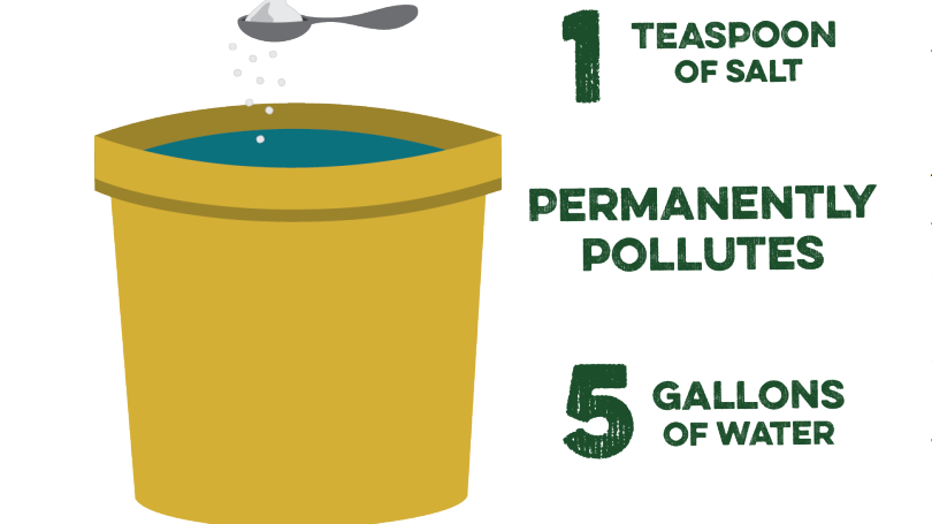
The report says chloride can also seep into soil and groundwater, where it may remain for decades and return to streams during later rainfall.
At monitoring sites along Cattail Branch and Town Branch in Leesburg, more than one-third of tests collected outside the winter salting season still exceeded the chronic toxicity threshold.
What salt does to wildlife
Chloride can harm small organisms that live on streambeds, including mayflies, stoneflies and water pennies.
Those organisms serve as indicators of stream health and provide food for fish, birds and other wildlife. The report says chloride can also affect fish growth and reproduction, while amphibians developing in seasonal pools are particularly vulnerable.
After heavy salt use in January and February 2025, ecological health scores declined or remained unchanged at every urban site monitored by the conservancy. None improved.
At Beaverdam Run in Ashburn, stream health fell from an acceptable rating in fall 2024 to an unacceptable rating by spring 2025.
Possible effects beyond wildlife
The report also warns that chloride is corrosive and can damage roads, bridges, vehicles and water pipes.
In homes with older plumbing, the conservancy says corrosion can cause lead to leach into tap water. Most water treatment plants are not equipped to remove chloride from drinking water.
How residents can reduce road salt pollution
The report recommends shoveling before applying salt, using it sparingly and sweeping up excess after storms.
One coffee mug of salt is enough to cover a 20-foot driveway, according to the guidance on page 4.
Salt also becomes ineffective below 15 degrees, when residents should consider using sand or a low-temperature deicer instead.
Loudoun County residents can report excessive salt on county roads or uncovered piles in parking lots to stormwater@loudoun.gov. Excess salt on state-maintained roads can be reported to the Virginia Department of Transportation at 1-800-367-7623.
The Source: This article was written using information from the Loudoun Wildlife Conservancy’s 2024-2025 Salt Watch report.