

Kratom poisonings spikes, what you need to know about the herbal drug
What is Kratom, and what are the risks?
Dr. Alta Deroo of the Hazelden Betty Ford Clinic joined FOX 9 All Day to discuss Kratom and the risks associated with this drug. There is a bill at the Minnesota Capitol to increase the age to buy Kratom to 21 years old. Some states have banned the sale of the drug altogether.
An increasingly popular herbal supplement that has already been banned in several states has recently exploded in reported use and led to a massive spike in exposure reports to U.S. poison control centers.
Why you should care:
A new Centers for Disease Control and Prevention (CDC) noted that exposure reports related to kratom had plateaued for several years after 2020, only to skyrocket last year.
RELATED: Supplement sold at gas stations sparks health fears as people report addiction symptoms
By the numbers:
Researchers found the number of kratom exposure reports between 2015 and 2025 soared approximately 1,200 percent, going from 258 in 2015 to 3,434 last year. In all, over that time, there were a total of 14,449 reports.
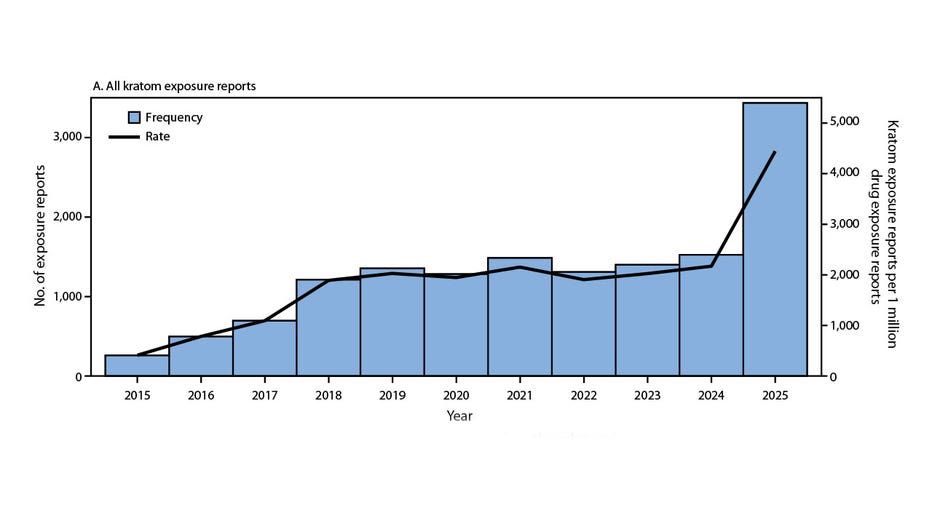
Frequency and rate* of kratom-related exposure reports to poison centers among persons aged ≥12 years, overall. (National Poison Data System, United States, 2015–2025 via CDC)
Big picture view:
The CDC described kratom as crushed or brewed leaves used for pain relief, mood enhancement, and to relieve opioid withdrawal symptoms.
The report noted that the dramatic increase last year corresponded with the rise of high-potency, semisynthetic variations.
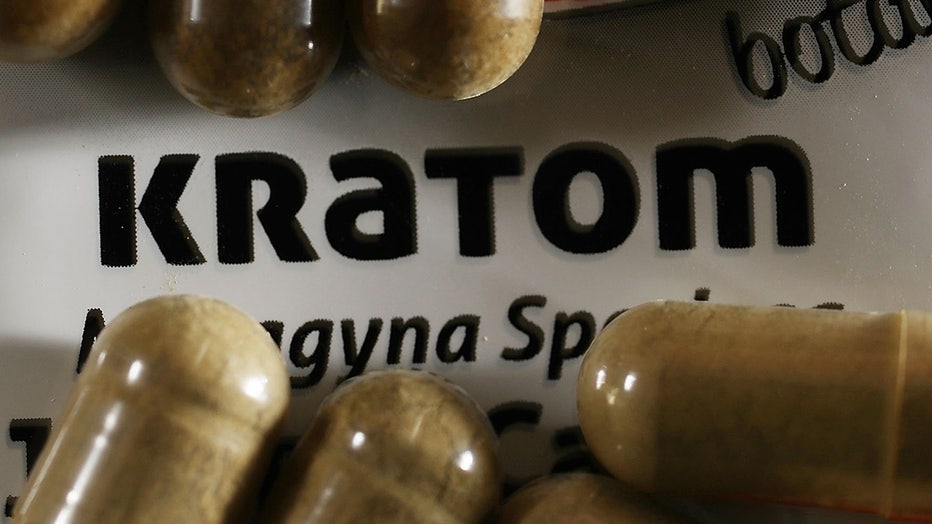
In this photo illustration, capsules of the herbal supplement Kratom are seen on May 10, 2016 in Miami, Florida. (Photo by Joe Raedle/Getty Images)
Kratom use rising
Additionally, use is increasing across demographic groups, with the number of exposure reports in people between 40 and 59 years old nearly catching up with those between 20 and 39 years old.
Men accounted for a vast majority of cases, the CDC found. They accounted for approximately two-thirds of cases where only kratom was found in the person’s system and up to three-quarters of cases where multiple substances had been used.
The CDC pointed out some of the limitations of its study, including that it relied on "voluntary self-reported data that might result in the underestimate of the number of milder events." It added, though, that the findings are important to highlight the growing kratom market and to demonstrate the role poison control centers can play as early warning systems for new trends.
The backstory:
The Food and Drug Administration explains that kratom comes from a tropical tree that grows in Southeast Asia, and it can be purchased online and in-stores. It estimated that 1.7 million people ages 12 and older used kratom in 2021.
The FDA report indicated there are currently no over-the-counter or prescription drugs that use kratom. The agency warned it is not appropriate to be used as a dietary supplement and is an unsafe food additive.
Officials have urged people not to use kratom because of the risk that it could cause liver toxicity, seizures, and substance use disorder.
Banning kratom
Minnesota lawmakers are currently considering passing further restrictions on the use of Kratom. One bill in the state legislature would raise the minimum age to buy it from 18 to 21 years old, FOX9, in Minneapolis reports. Another proposal would classify kratom as a Schedule II drug, which would mean people would need a prescription to buy it.
Kratom is already banned in several states, including:
- Alabama
- Arkansas
- Indiana
- Louisiana
- Vermont
- Wisconsin
Last week, Connecticut became the seventh state to approve a ban.
The Source: Information in this article was taken from the CDC, FDA and FOX9 KSMP. This story was reported from Orlando.