

WHO seeks answers after Russian lab worker dies; second pneumonia illness reported

A view of an infectious diseases hospital in the town of Shelekhov, where an employee of the Irkutsk Antiplague Research Institute had died, in the Irkutsk region on October 7, 2026. (Photo by AFP via Getty Images)
RUSSIA - The World Health Organization is seeking more information from Russian officials after a technician at a Siberian research institute died of pneumonia of unknown cause and reports emerged of a second employee with a similar illness.
Russian officials told the WHO on Tuesday that no cases of plague have been recorded in Irkutsk, the Siberian region where the technician worked, according to Forbes. The cause of the first worker’s death has not been publicly confirmed.
What WHO is asking Russia to explain
What we know:
WHO Director-General Tedros Adhanom Ghebreyesus said the agency has asked Russia for details about the researcher’s severe pneumonia, the pathogen that prompted public health measures and reports of a second employee with pneumonia of undetermined cause.
The WHO said timely and transparent information is needed to assess any potential public-health risk.
A WHO spokesperson said the risk to the general public appears low based on unofficial information. The agency said the deceased worker’s contacts had reportedly been identified and monitored, with no illnesses reported among them.
What is known about the first case
The backstory:
Russian health authorities are investigating the death of a 28-year-old technician at the Irkutsk Anti-Plague Research Institute of Siberia and the Far East. She died Oct. 2 after developing pneumonia of unknown cause, Forbes reported.
Authorities placed nearly 200 people under medical observation as testing continued. Russia’s public-health agency said it had not found microorganisms tied to the woman’s professional work in her samples.
Russian media reports that the technician may have broken a test tube containing plague bacteria have not been confirmed by authorities.
What plague is and why the illness drew concern
Big picture view:
Plague is caused by Yersinia pestis bacteria and most often spreads through flea bites or contact with infected animals, according to the Cleveland Clinic.
The disease can affect the lymph nodes, bloodstream or lungs. Pneumonic plague, the form that affects the lungs, can spread from person to person through respiratory particles and can be fatal without fast treatment.
Still, plague is treatable with antibiotics when it is diagnosed early. The WHO says recovery rates are high for pneumonic plague when treatment begins quickly.
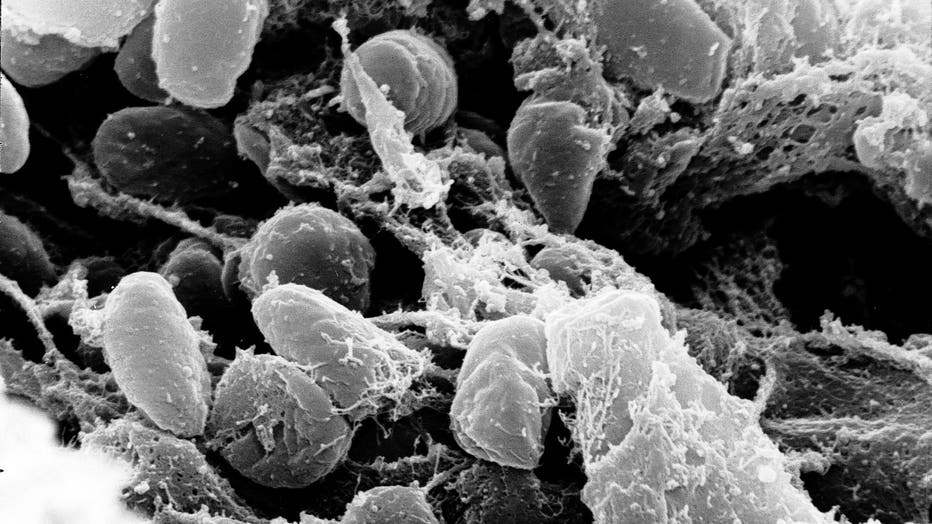
Scanning electron micrograph depicting a mass of Yersinia pestis bacteria (the cause of bubonic plague) in the foregut of the flea vector. Credit: NIAID. (Photo by: IMAGE POINT FR/NIH/NIAID/BSIP/Universal Images Group via Getty Images)
What remains unknown
What we don't know:
It is not known whether the technician had plague, whether the reported second case exists or whether there was any incident at the lab.
Russian officials have not publicly disclosed the cause of the technician’s pneumonia. The WHO said it is continuing to seek details from Russian authorities.
The Source: This article was written using information from Forbes, The Atlantic, World Health Organization and Cleveland Clinic.