

'No Kings' protest: What to know about your rights
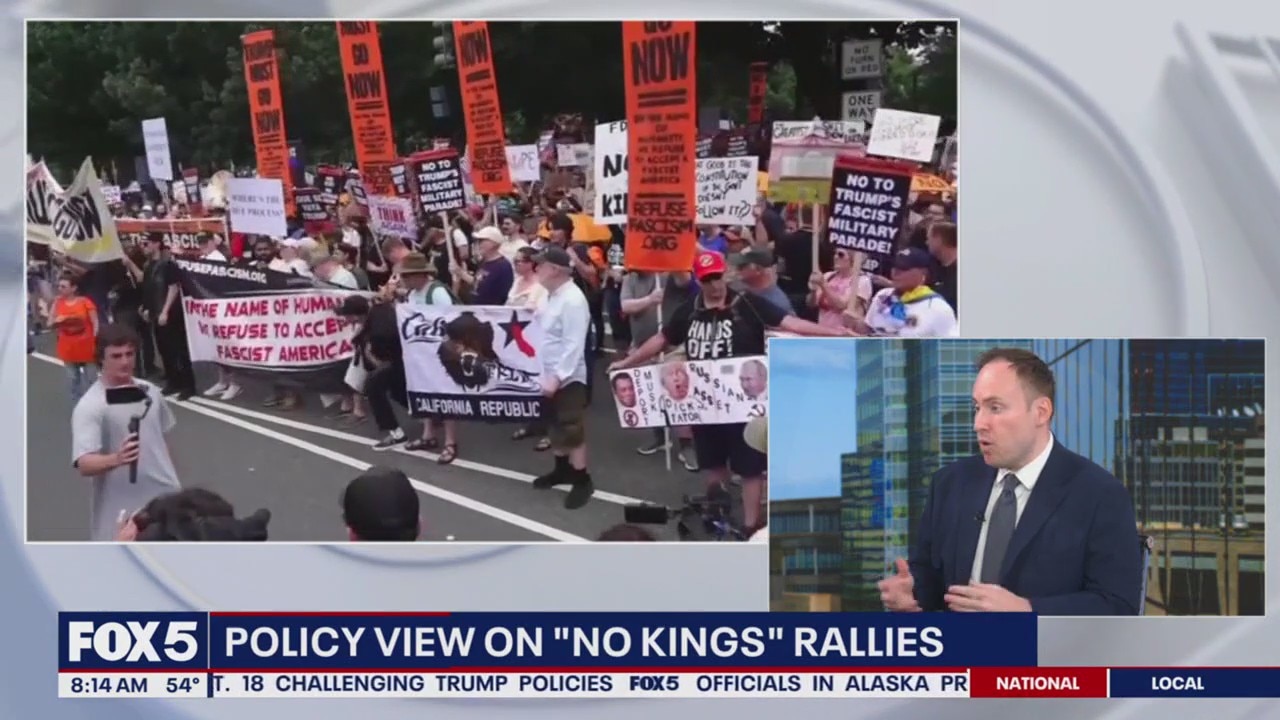
‘No Kings’ protest: History of protesting executive power in the U.S.
Thomas Berry, director of the Cato Institute’s Robert A. Levy Center for Constitutional Studies, discusses the historical context of protest in the United States.
WASHINGTON, D.C. - With millions of protesters expected to gather across the country for "No Kings Day," here's what you need to know about safely exercising your First Amendment rights.
Be prepared
What you can do:
Experts say preparation is key when it comes to protesting safely, which includes gathering supplies beforehand and creating a plan:
- Bring water, snacks, any needed medicine and cash.
- Fully charge your cellphone and bring a battery extender.
- Bring protective goggles, face covering and towelettes in case of tear gas or irritants.
- Know your emergency contacts.
- Let someone know your plan and keep them updated.
- Study the route and have an offline map of the area.
- Plan multiple routes into and out of the area.
- Set a meet-up location.
- Be alert to anything suspicious, maintain awareness.
- If you see something, say something.
- Do not bring anything illegal or that can be seen as a weapon.
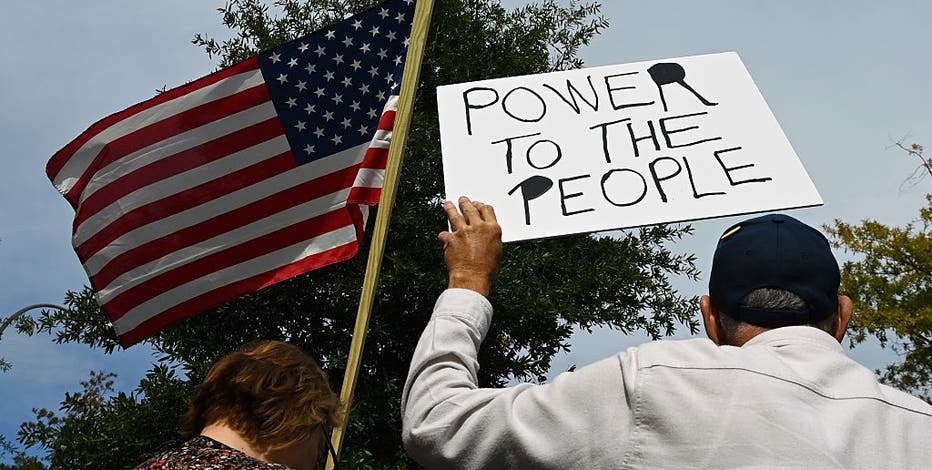
What to know about the ‘No Kings’ protest in DC this weekend
Washington, D.C. and the DMV will host the third major "No Kings" march and rally Saturday, March 28, 2026, part of a nationwide wave of demonstrations the same day.
Peaceful protesting
What we know:
Peaceful protesting happens all the time, but if things should escalate while you are in the middle of a protest, here are some helpful tips:
- Stay calm and peaceful
- Don't engage with agitators
- Respect other protesters' space
- Obey lawful orders
Know your rights
Why you should care:
Protesting is a fundamental human right under the First Amendment, which allows for peaceful assembly, free speech and petitioning the government.
- You can march, hold signs, chant and distribute literature in public spaces.
- Parks and sidewalks are traditional public forums, but protests on private property or restricted areas are not protected.
- Cities can require permits for parades or large rallies to manage traffic, but cannot deny them based on the content of the message.
- Officers may impose reasonable "time, place, and manner" restrictions, but cannot stop you from filming their actions.
- Law enforcement also can't confiscate or demand to see your pictures or video without a warrant, or force you to delete data.
- Protests that turn violent, destroy property, block emergency services or "incite immediate lawless action" are not protected.
- Police may not break up a gathering unless there is a clear and present danger of riot, disorder, interference with traffic or other immediate threat to public safety.
- If officers issue a dispersal order, they must provide a reasonable opportunity to comply.
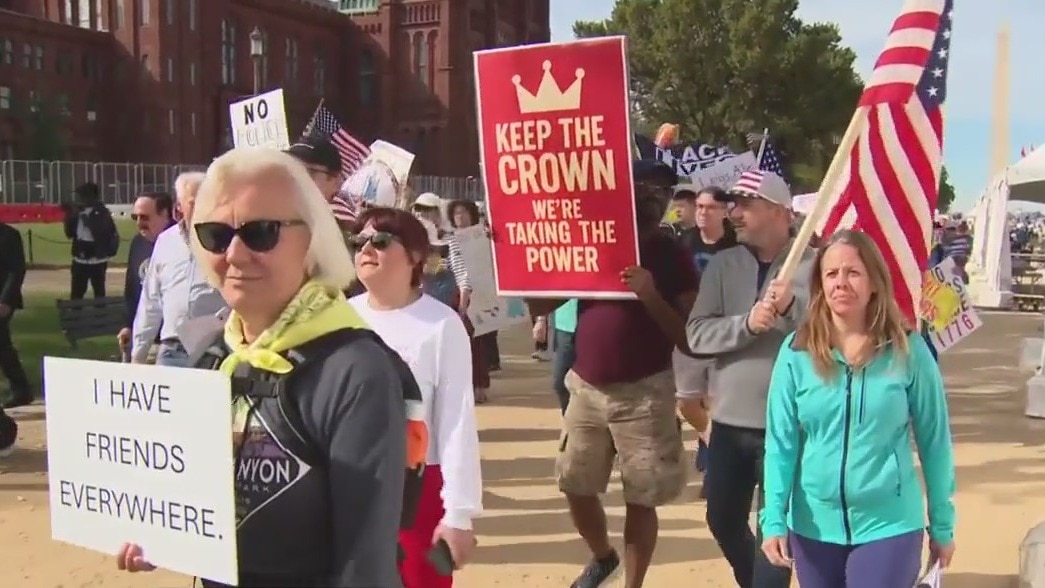
'No Kings' protests across DC
Thousands of people took to the streets of Washington, D.C., and across the U.S. on Saturday to protest President Donald Trump's administration as part of massive "No Kings" protests.
What to do if you are detained
Dig deeper:
If the situation does escalate, and you are confronted or detained by law enforcement, it is important to stay calm:
- Do not resist arrest
- State you wish to remain silent and want a lawyer
- Document what you can while being safe
- Seek legal support
The Source: Information from this article was sourced from the Human Rights Campaign, the American Civil Liberties Union and the First Amendment.