This browser does not support the Video element.
AAA driving tips for winter weather
Mark Gruba with AAA of Western and Central New York joins Austin Westfall with tips on what to do if you have to drive during this winter storm.
Over the decades, winter has gotten much warmer and has become the fastest-warming season for most of the U.S., according to a new report.
Climate Central gathered data from 244 weather stations across the country, calculating the average temperatures and days above normal for each winter from 1969 (referred to as "winter 1970") to 2024-2025 (or "winter 2025").
Winter is fastest-warming season for most of US
By the numbers:
The data found that winter is the fastest-warming season for most of the U.S. – affecting snowfall, water supplies, winter sports, spring allergies, summer fruits and more.
Locations across the Northeast and the Great Lakes region have seen some of the highest rates of winter warming since 1970.
Winters have warmed most in cities across Upper Midwest
Dig deeper:
From 1970 to 2025, winters have warmed in 98% of 244 U.S. cities analyzed – by 3.9°F on average.
On average, winters have warmed the most in cities across the Upper Midwest (5.4°F), Alaska (4.8°F), the Northeast (4.8°F) and the Ohio Valley (4.4°F).
The top winter warming locations were: Burlington, Vt. (8.1°F); Milwaukee, Wis. (7.3°F); Green Bay, Wis. (7°F); Waterloo, Iowa (6.8°F); Concord, N.H. (6.7°F); and Toledo, Ohio (6.7°F).
Pedestrians walk down snowswept streets after a snowstorm hit the midwest February 26, 2013 in Prairie Village, Kansas. (Credit: Julie Denesha/Getty Images)
In addition, most cities (88%) now experience at least seven more warmer-than-normal winter days than they did in the early 1970s.
The rise in warmer-than-normal winter days was largest among cities in the Northeast and Upper Midwest (both with 16 more days on average).
The cities that saw the largest increase in warmer-than-normal winter days since 1970 were: Las Vegas, Nev. (32 more days); San Francisco, Calif. (30 more days); Fresno, Calif. (30 more days); and San Juan, Puerto Rico (30 more days).
What they're saying:
"In our warming world, the coldest days aren’t as cold, and cold snaps are shrinking," Climate Central said in its report.
Winter outlook for 2026
Big picture view:
During winter 2025-2026, the southern tier of the U.S. and the eastern seaboard are likely to be warmer than normal, according to Climate Central.
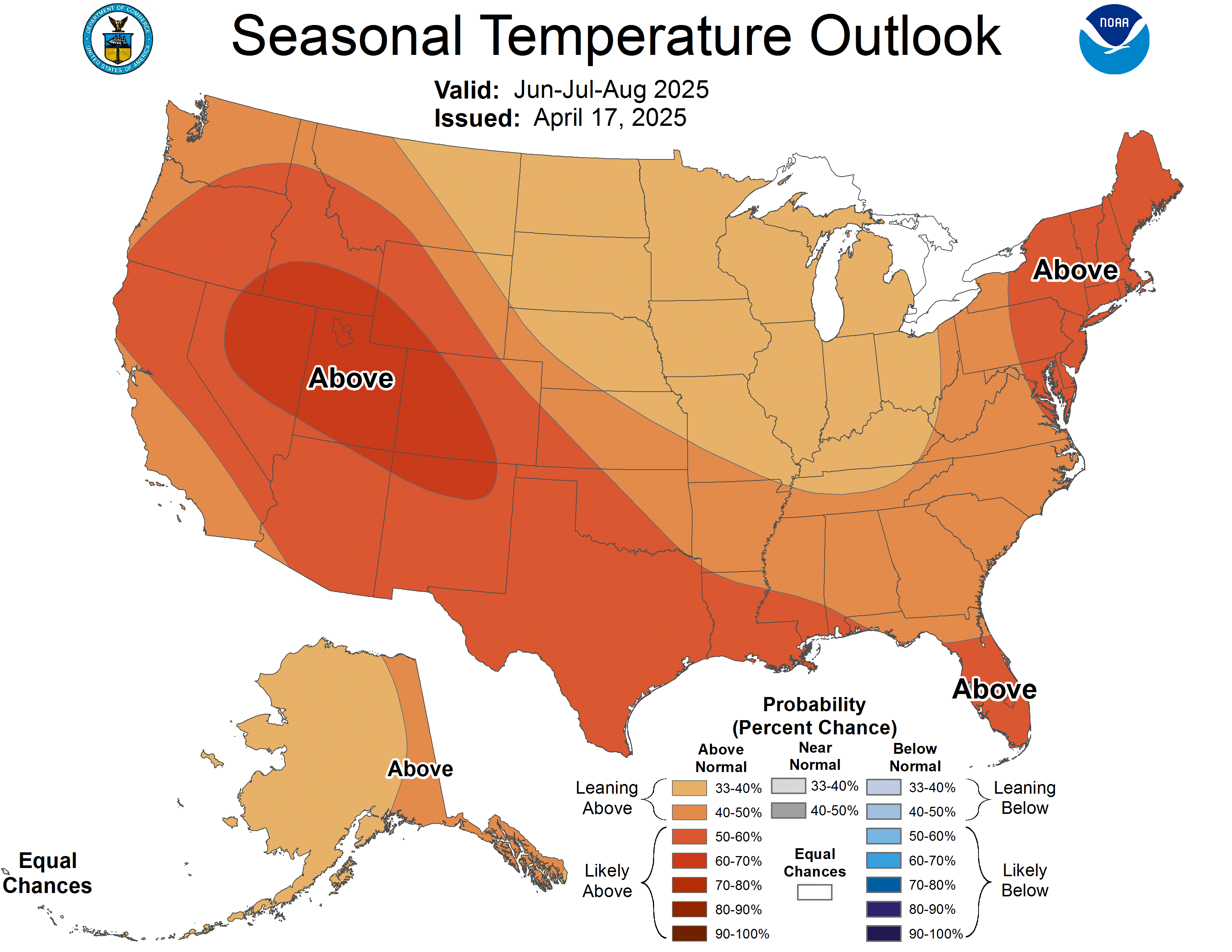
Meanwhile, the country’s northern tier is likely to be wetter than normal.
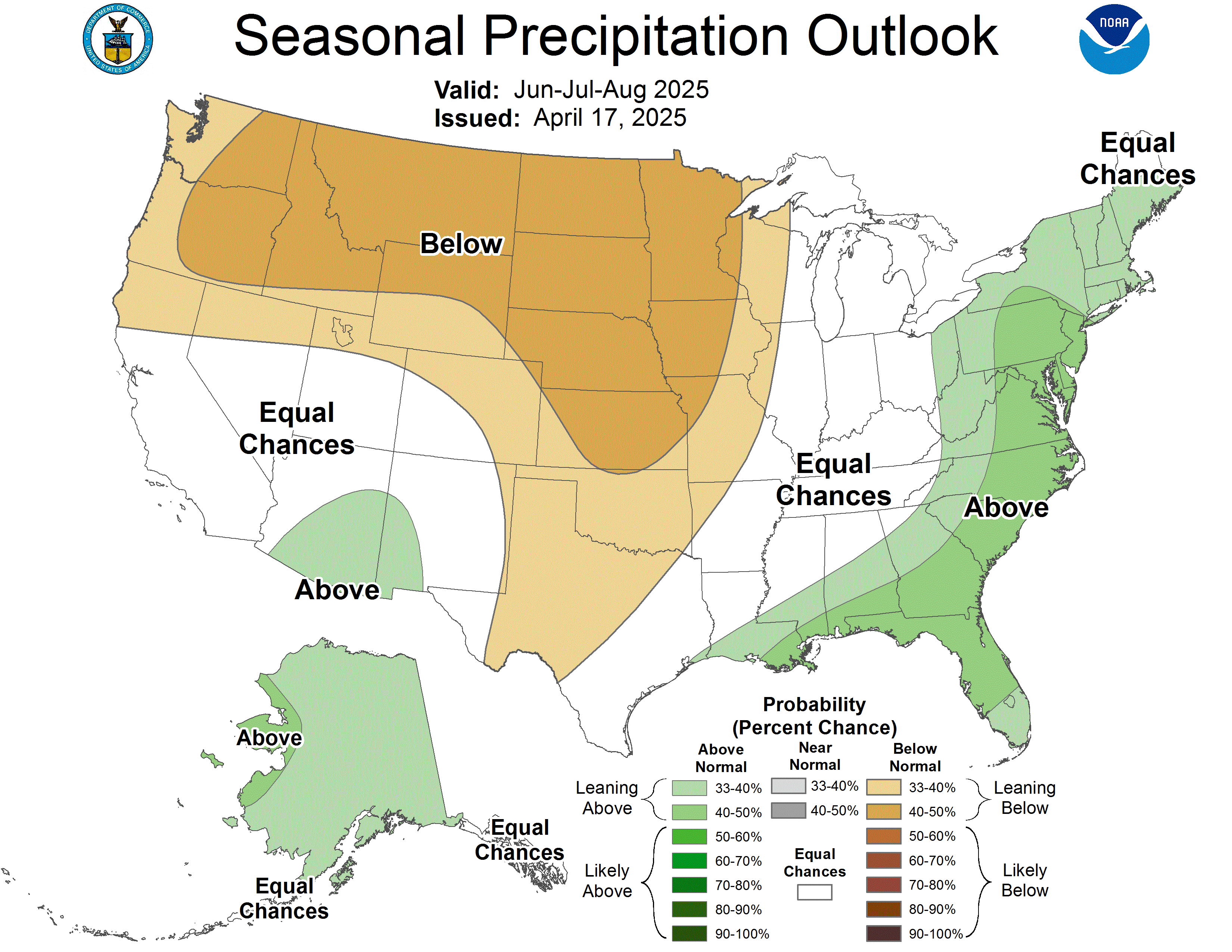
"With La Niña conditions emerging in September 2025, the winter outlook is broadly consistent with typical winter La Niña patterns in the U.S.," the organization said.
Previous data reveals extreme heat, later first freezes
The backstory:
This news follows other data released this past summer, which revealed that extreme heat was evident in nearly all U.S. states this past summer.
RELATED: These states were unusually hot this summer, data shows
According to Climate Central, at least one in five people on the planet felt a strong climate change influence every day from June to August 2025. In 48 U.S. states, the average person experienced at least 30 days of risky heat days – days with temperatures hotter than 90% of the temperatures recorded in a local area from 1991 to 2020.
According to other data, the first freeze also now arrives later in 88% (179) of cities analyzed — 12 days later, on average, than in the early 1970s.
The Source: The information for this story was provided by Climate Central, which analyzed temperature data since 1970 from 244 U.S. cities to see how winters have warmed from 1970 to 2025. Previous studies from Climate Central were also reported. This story was reported from Los Angeles.