

Ranked choice voting in DC: How to mark your ballot, avoid mistakes and how winners are decided
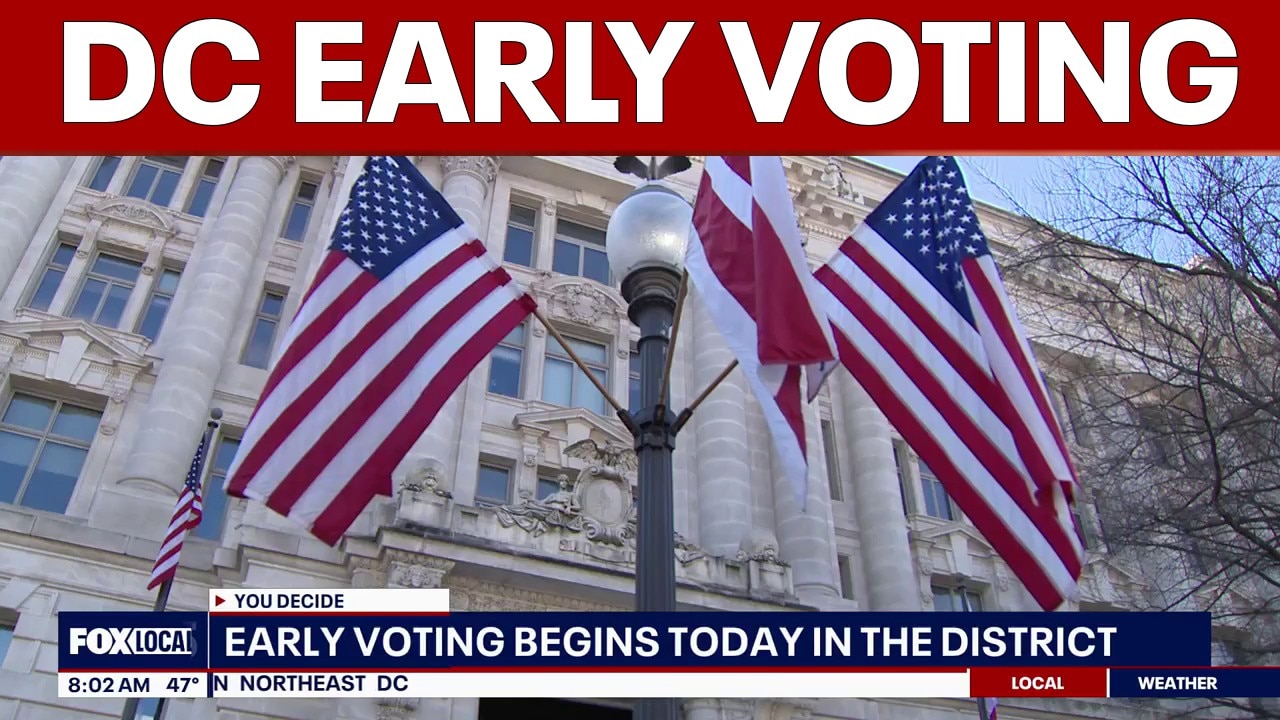
Early voting begins in DC ahead of midterm elections
Early voting began Monday in the District of Columbia ahead of the upcoming midterm elections, opening dozens of polling sites for voters set to choose a new mayor and congressional delegate in the District.
WASHINGTON - As D.C. voters prepare to cast ballots in the midterm election on Nov. 3, they are navigating a ranked choice voting system that fundamentally changes how ballots are cast and tabulated across District contests.
How To Mark Your Ballot:
In any District race featuring three or more candidates, voters can rank up to five contenders in order of preference, according to the D.C. Board of Elections. Ballots feature columns corresponding to each preference level: voters fill in the bubble for their first choice in the first column, their second choice in the second column, and continue down the line.
To ensure ballots are counted correctly, election guidelines outline several key rules:
- You do not have to rank five: Voters are free to choose only one candidate, and their vote will still count.
- Backup choices do not harm your first pick: Assigning secondary rankings to other candidates only matters if your top choice is eliminated.
- Avoid duplicate rankings: Do not give multiple candidates the same ranking, as each column must have only one selection.
- Do not skip consecutive rankings: Skipping two consecutive columns can invalidate any choices marked after the gap.
How The Votes Are Counted:
All first-choice selections are tabulated first. If a candidate secures a majority of more than 50% of first-choice votes, that candidate wins outright.
If no candidate reaches that threshold, the candidate with the fewest votes is eliminated. Those ballots are then transferred to each voter’s next active ranked preference. The elimination and reallocation process continues round by round until a candidate surpasses the 50% mark.
The backstory:
District voters approved the transition to ranked choice voting in November 2024 through Initiative 83, which passed with roughly 73% of the vote and carried all eight wards. The system made its citywide debut during the primary earlier this year and is now being used across general election contests.
When To Expect Results:
Because the District accepts mail-in ballots that arrive after Election Day provided they are postmarked on time, election officials do not run final instant-runoff tabulation rounds until the vast majority of ballots are received.
While election workers begin reporting unofficial first-choice returns on election night, definitive winners in close ranked choice contests may take days to determine as mail ballots are received and elimination rounds are calculated.
For everything you need to know about voting in Washington D.C.'s general election, visit the FOX 5 DC voting guide.
The Source: This article was written using information from the D.C. Board of Elections and previous reporting by FOX 5 DC.